


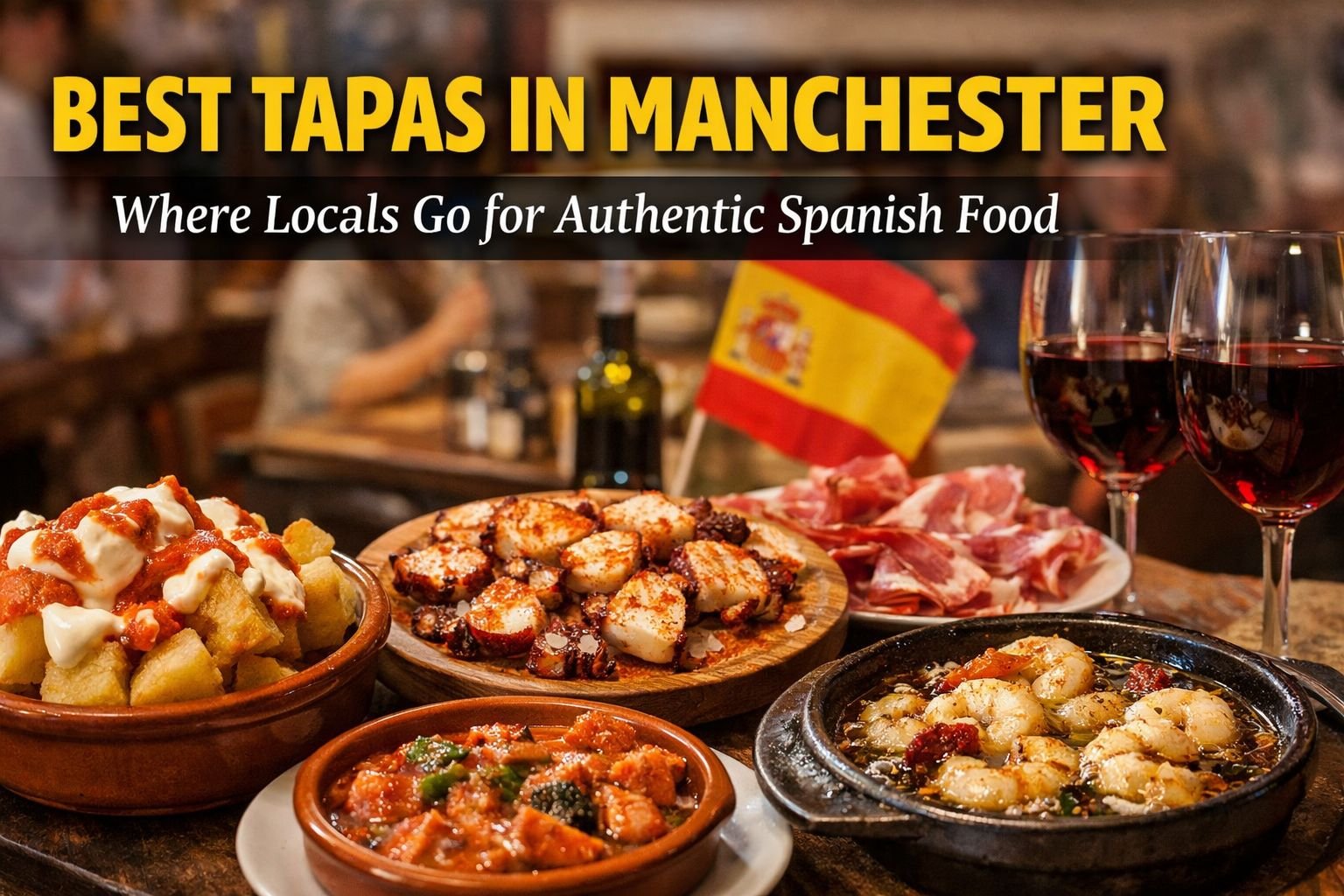
Manchester has embraced tapas culture in a way that feels genuine rather than fashionable. Walk through King Street after work, spend an evening on Beech Road in Chorlton, or drop into the Northern Quarter late at night, and the same pattern emerges. Plates are shared. Wine is poured slowly. Conversations stretch well beyond the first order. This is why the search for the best tapas in manchester has become so competitive and so meaningful for local diners.
Tapas works here because it fits how Manchester eats. The city favours flexibility over formality and atmosphere over ceremony. A quick drink can turn into dinner. Dinner can easily turn into the whole evening. This guide reflects where Mancunians actually go, written with local knowledge rather than promotional intent.
What Makes Great Tapas in Manchester
Tapas is often misunderstood as simply small portions. In reality, it is a social style of eating rooted in Spanish bar culture. Plates are designed to be shared. Dishes arrive when ready, not in a fixed order. Conversation is as important as what is on the table.
When people discuss the best tapas in manchester, quality and intent matter more than presentation. Proper Spanish cooking relies on good ingredients used simply. Jamón that has been cured correctly. Manchego aged with care. Olive oil that adds flavour rather than grease. Seafood that is fresh enough to stand up to minimal cooking.
Technique separates good from exceptional. A tortilla needs careful control of heat and timing. Croquetas must be crisp outside and creamy within. Octopus should be tender, never rubbery. These are not dishes made for novelty. They are rooted in Spanish home cooking and regional tradition, and Manchester’s strongest kitchens respect that heritage.
Best Tapas in Manchester
Ask experienced diners about the best tapas in manchester and the same names return again and again, not because of marketing, but because of consistency.
Bar San Juan. Chorlton
On Beech Road in Chorlton, Bar San Juan has been part of neighbourhood life since 2010. The room is small and busy, with Spanish wine bottles lining the walls and football memorabilia overhead. Tables are tightly packed and bookings are essential, particularly at weekends.
The food is resolutely traditional. Slow cooked beef cheeks arrive rich and tender. Grilled octopus is cooked with care. Padron peppers are blistered and salted simply. Dishes arrive as they are ready, which encourages sharing and lingering. The drinks list focuses on Spanish wine, beer, and sherry, served by staff who understand the food and the culture behind it.
It is regularly recommended by Spanish diners living in Manchester, which is often the clearest marker of authenticity.
El Gato Negro. King Street
El Gato Negro remains one of the most respected Spanish restaurants in the city centre. Since relocating to King Street, it has combined serious cooking with an accessible atmosphere across three floors, including a rooftop terrace that draws crowds in warmer months.
Chef Simon Shaw built the menu through extensive time spent in Barcelona, and that influence shows in the balance of simplicity and refinement. Padron peppers, croquetas, jamón, and salt cod are treated with precision rather than reinvention. Ox cheek dishes and grilled octopus consistently rank among favourites.
For many diners, this is where special occasions and tapas intersect, making it a frequent reference point when discussing the best tapas in manchester.
El Rincon de Rafa. Deansgate
Hidden down an alley near Deansgate, El Rincon de Rafa has served traditional Spanish food for more than three decades. The basement space feels accumulated rather than designed, with football scarves and memorabilia covering the walls.
The menu is extensive and unapologetically classic. Albondigas, chorizo cooked in various styles, garlic prawns, tortilla, and slow cooked oxtail form the backbone. Portions are generous and pricing remains fair for the city centre.
Its longevity is its authority. Restaurants do not survive this long without trust, and for many locals and Spanish residents, Rafa’s represents one of the most authentic experiences in the city.
Maricarmen. Ancoats and Northern Quarter
Maricarmen represents a newer generation of Spanish dining in Manchester. Founded by Marian Diaz and Jose Nunez after their Madrid restaurant closed during Covid, it introduced El Tableo service to the city. Servers circulate with boards of freshly prepared tapas, and diners choose dishes as they pass. Plates are counted at the end.
Each dish costs a modest amount, encouraging exploration and sharing. The food stays rooted in tradition while remaining accessible. The success of the Ancoats site led to a second location in the Northern Quarter, each with a slightly different atmosphere but the same philosophy.
For value, hospitality, and genuine Spanish spirit, Maricarmen has quickly earned its place in conversations about the best tapas in manchester.
La Bandera. Deansgate
Just off Deansgate, La Bandera offers Spanish and Canarian influences in a relaxed setting. Gambas cooked in garlic and oil, slow cooked pork cheeks, padron peppers, and generous cheese and charcuterie boards form the core of the menu.
Paella is a highlight and is cooked to order rather than prepared in advance. Off peak menus make it accessible for regular visits, and the restaurant attracts a loyal local following, including members of Manchester’s Spanish community.
A Neighbourhood Guide to Tapas
City Centre
The city centre offers the highest concentration of Spanish dining. King Street and Deansgate host established venues with experienced kitchens and steady footfall. This is where many visitors first encounter the best tapas in manchester, drawn by convenience and reputation.
Northern Quarter
The Northern Quarter brings a more informal approach. Later opening hours, younger crowds, and smaller venues create a livelier atmosphere. Tapas here often blends seamlessly into nights out, with food and drink flowing together.
South Manchester
Chorlton and surrounding areas reflect a neighbourhood driven tapas culture. Restaurants here are woven into daily life rather than destination dining, and regulars return week after week for familiarity and quality.
Tapas for Different Occasions
Tapas adapts easily to different social settings, which helps explain the enduring interest in the best tapas in manchester.
For date nights, venues with softer lighting and steady pacing encourage conversation. For group dining, shared plates remove the pressure of individual choices. For casual evenings, tapas bars allow diners to start small and decide as they go.
Seasonality also shapes menus. Rich stews and baked dishes dominate colder months, while lighter seafood and vegetable plates take precedence when the weather improves.
Why Tapas Fits Manchester So Well
Tapas aligns naturally with Manchester’s dining identity. Meals are social, flexible, and unhurried. The best tapas in manchester succeeds because it prioritises atmosphere alongside skill, encouraging people to stay longer and return often.
The city’s strongest Spanish restaurants avoid chasing trends. Instead, they respect tradition while understanding how locals want to eat. That balance keeps them relevant and trusted.
Conclusion
Finding the best tapas in manchester is less about a single destination and more about understanding the city itself. From Chorlton’s neighbourhood warmth to King Street’s polished confidence, from hidden basement taverns to lively Northern Quarter rooms, Manchester offers tapas experiences with real depth.
These restaurants succeed because they treat tapas as culture, not a format. Sharing, conversation, and time matter as much as flavour. That is why tapas has become part of everyday life in Manchester, and why the city continues to set the standard outside Spain itself.
Frequently Asked Questions
What is considered the best tapas in Manchester
The best tapas in Manchester is generally defined by authenticity, ingredient quality, and atmosphere rather than portion size. Restaurants that respect Spanish cooking traditions, use proper ingredients, and encourage sharing and relaxed dining are most often recommended by local diners.
Which area of Manchester is best for tapas
The city centre offers the highest concentration of Spanish restaurants, particularly around King Street and Deansgate. Chorlton is also well known for neighbourhood tapas dining, while the Northern Quarter provides a more informal late evening tapas scene.
Are Manchester tapas restaurants authentic Spanish
Many Manchester tapas restaurants are run by Spanish chefs or owners and use traditional recipes and imported ingredients. Several are regularly frequented by Spanish residents, which is often seen as a strong indicator of authenticity.
Is tapas dining expensive in Manchester
Tapas prices in Manchester vary by location and style. City centre restaurants tend to be more expensive, while neighbourhood venues and newer concepts offer strong value. Sharing plates often makes tapas more affordable than traditional three course meals.
Is tapas good for groups
Yes. Tapas is particularly suited to group dining because dishes are shared and ordered gradually. Many Manchester tapas restaurants offer group menus or flexible ordering that suits larger tables.
Do Manchester tapas restaurants require booking
Popular tapas restaurants often require booking, especially at weekends. Smaller neighbourhood venues with limited seating tend to fill quickly due to regular local customers.
Read More: Louis Manchester: Inside the Spinningfields Restaurant Everyone Is Talking About
