
Digital learning management systems are now essential infrastructure in British schools, particularly as institutions balance classroom teaching with online resources. Among the platforms attracting increased search interest is Schoology Alfa a term that has prompted questions from teachers, administrators, and parents seeking to understand what it actually represents within the wider education technology landscape.
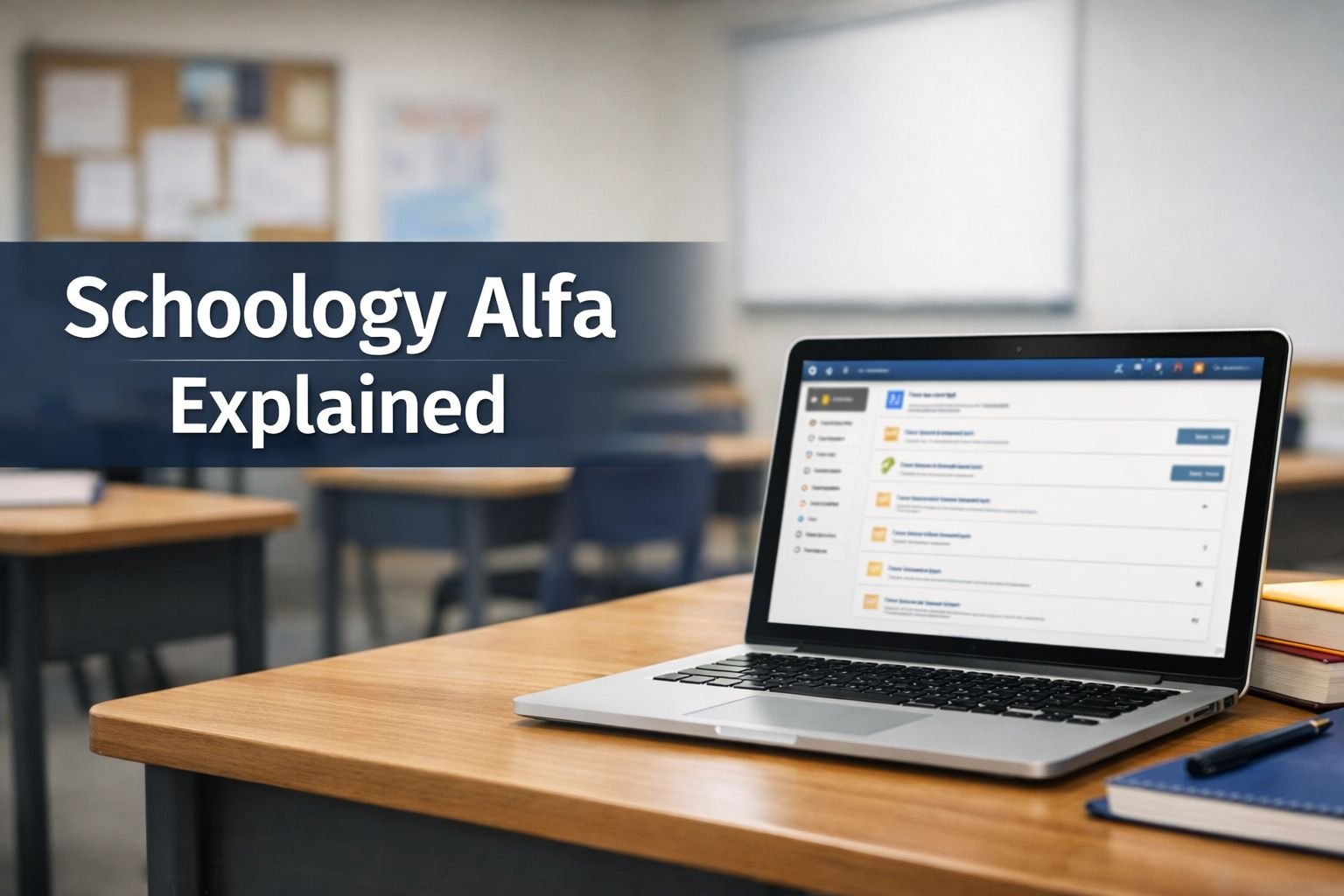
The short answer is that Schoology Alfa is not a separate product. Instead, it refers to a customised deployment of PowerSchool’s Schoology Learning platform, typically branded by individual educational institutions or foundations. Understanding this distinction matters for UK schools evaluating learning management systems, especially as they navigate procurement decisions, data protection obligations, and the ongoing digital transformation of British education.
The Core Platform Behind the Name
Schoology Learning is a cloud-based learning management system designed primarily for K-12 education. It is used by millions of students and teachers globally and is operated by PowerSchool, the North American education technology company that acquired Schoology in 2019 as part of a wider expansion into digital learning infrastructure.
At its core, the platform functions as a central hub where teachers distribute materials, set assignments, assess student work, and communicate with learners and parents. Students submit coursework, track deadlines, and receive feedback within a single environment, while parents are able to monitor progress through linked accounts.
What differentiates instances labelled Schoology Alfa is institutional customisation rather than software variation. Schools and educational organisations can brand their Schoology deployment using custom URLs, visual themes, and specific feature configurations. In several cases, the “Alfa” naming convention has been associated with institutions such as Alfa Fundación, an educational foundation operating outside the UK. Searches for Schoology Alfa are therefore most commonly linked to users accessing a branded portal rather than a distinct version of the platform.
Why the Term Is Appearing More Frequently
The emergence of Schoology Alfa as a search term reflects a broader issue within education technology: branding at the institutional level often obscures the underlying platform. Teachers, students, and parents encountering an unfamiliar login page may assume they are dealing with a new system, when in practice they are using a customised instance of an established one.
This confusion is amplified in international contexts, where platforms developed primarily for North American education systems are adapted for use elsewhere. For UK users, the lack of clear public documentation explaining customised deployments can make it difficult to identify what tools they are actually using and how those tools relate to more familiar platforms.
Recent Developments Within the Schoology Platform
Interest in Schoology Alfa has also coincided with a period of change across the wider Schoology ecosystem. Over the past two academic years, PowerSchool has expanded the platform’s functionality, particularly in areas related to artificial intelligence, classroom integration, and age-appropriate user experiences.
Artificial Intelligence Features
One of the most significant developments has been the introduction of AI supported tools designed to assist both teachers and students. These tools focus on guided learning rather than automated answers, using prompting techniques intended to support understanding instead of shortcuts. For educators, AI-assisted content creation tools aim to reduce administrative workload while leaving final editorial control firmly with teaching staff.
From a UK perspective, the design choice to process AI features within existing platform infrastructure rather than through external consumer models has drawn attention, particularly in relation to data protection and safeguarding expectations.
Classroom Tool Integration
Schoology has also strengthened its integration with widely used classroom tools, including document creation, collaboration software, and virtual meeting platforms. These integrations allow teachers to embed learning materials directly within assignments, reducing the need for students to switch between multiple systems during lessons.
For schools already operating within established digital ecosystems, this interoperability can influence procurement decisions as much as headline features.
Primary and Elementary Learning Interfaces
Recognising that younger learners require different digital environments, the platform includes simplified interface options designed for early and primary-age students. These interfaces prioritise visual navigation, flexible submission formats, and reduced cognitive load, while allowing teachers to control when and how such features are enabled.
UK-Specific Considerations for Schools
While Schoology has a significant presence internationally, its adoption within UK education remains uneven. British schools operate within a regulatory and pedagogical context that differs in important ways from the system for which the platform was originally designed.
Data Protection and Compliance
UK schools must comply with the UK General Data Protection Regulation and the Data Protection Act 2018. This imposes clear obligations around transparency, lawful processing, data minimisation, and parental involvement where minors are concerned.
Any learning management system — including Schoology and customised deployments such as Schoology Alfa must support clear privacy notices, appropriate access controls, and secure data handling practices. Schools considering the platform would be expected to carry out independent due diligence, including review of data processing agreements and technical safeguards.
Market Competition and Practical Adoption
The UK education technology market includes a mix of global platforms and systems developed specifically for British curricula and assessment structures. As a result, schools tend to prioritise ease of use, staff training requirements, integration with existing systems, and long-term cost sustainability over headline innovation.
Feedback from UK educators using Schoology in various forms suggests that successful adoption depends less on the platform itself and more on the quality of implementation, professional development, and ongoing technical support.
Strengths and Limitations in Practice
Schoology provides a comprehensive set of tools for course management, assessment, communication, and mobile access. Its design encourages collaboration and regular feedback, and its accessibility features support a range of learning needs.
At the same time, the breadth of available functionality can create a learning curve for staff, particularly in schools transitioning from simpler systems. Licensing costs and integration with UK-specific administrative software also remain practical considerations for decision-makers.
Why Understanding the Term Matters
The confusion surrounding Schoology Alfa illustrates how education technology can become opaque to end users when institutional branding replaces clear platform identification. Teachers moving between schools, students changing institutions, and parents supporting learning at home may struggle to recognise that they are interacting with the same underlying system in different forms.
Clarity benefits everyone involved. Understanding that Schoology Alfa refers to a branded deployment rather than a unique platform helps users focus on how the system works, how data is handled, and how effectively it supports teaching and learning.
A Measured View for UK Schools
As British schools continue to refine their use of digital learning tools, platforms like Schoology will remain part of the conversation. Whether accessed through a standard interface or a customised environment such as Schoology Alfa, the fundamental questions remain the same: does the platform align with educational goals, protect student data, support teachers effectively, and improve learning outcomes?
Technology alone does not transform education. Its impact depends on thoughtful implementation, informed decision making, and a clear understanding of what systems actually are not just what they are called.
FAQs
What is Schoology Alfa?
Schoology Alfa is not a separate learning management system. It refers to a customised or institution-branded deployment of the Schoology Learning platform, often used by specific schools or educational foundations rather than the general public.
Is Schoology Alfa different from standard Schoology?
Functionally, Schoology Alfa uses the same underlying platform as standard Schoology. Differences typically relate to branding, configuration, and how features are enabled by the institution using it.
Why are UK users searching for Schoology Alfa?
UK teachers, students, and parents often encounter the term when accessing a branded Schoology portal linked to an international institution. The unfamiliar name can create confusion about whether a new platform is being used.
Is Schoology Alfa GDPR compliant in the UK?
Any Schoology deployment used by UK schools must comply with UK GDPR and the Data Protection Act 2018. Schools are responsible for verifying compliance through data processing agreements and local due diligence.
Should UK schools consider Schoology or alternatives?
The suitability of Schoology depends on a school’s curriculum needs, existing systems, staff training capacity, and budget. No single learning management system is universally best, and pilot testing is widely recommended.
Read More: Oxlibcat: Why UK Users Are Seeing This Mysterious Term And What’s Really Behind It
