


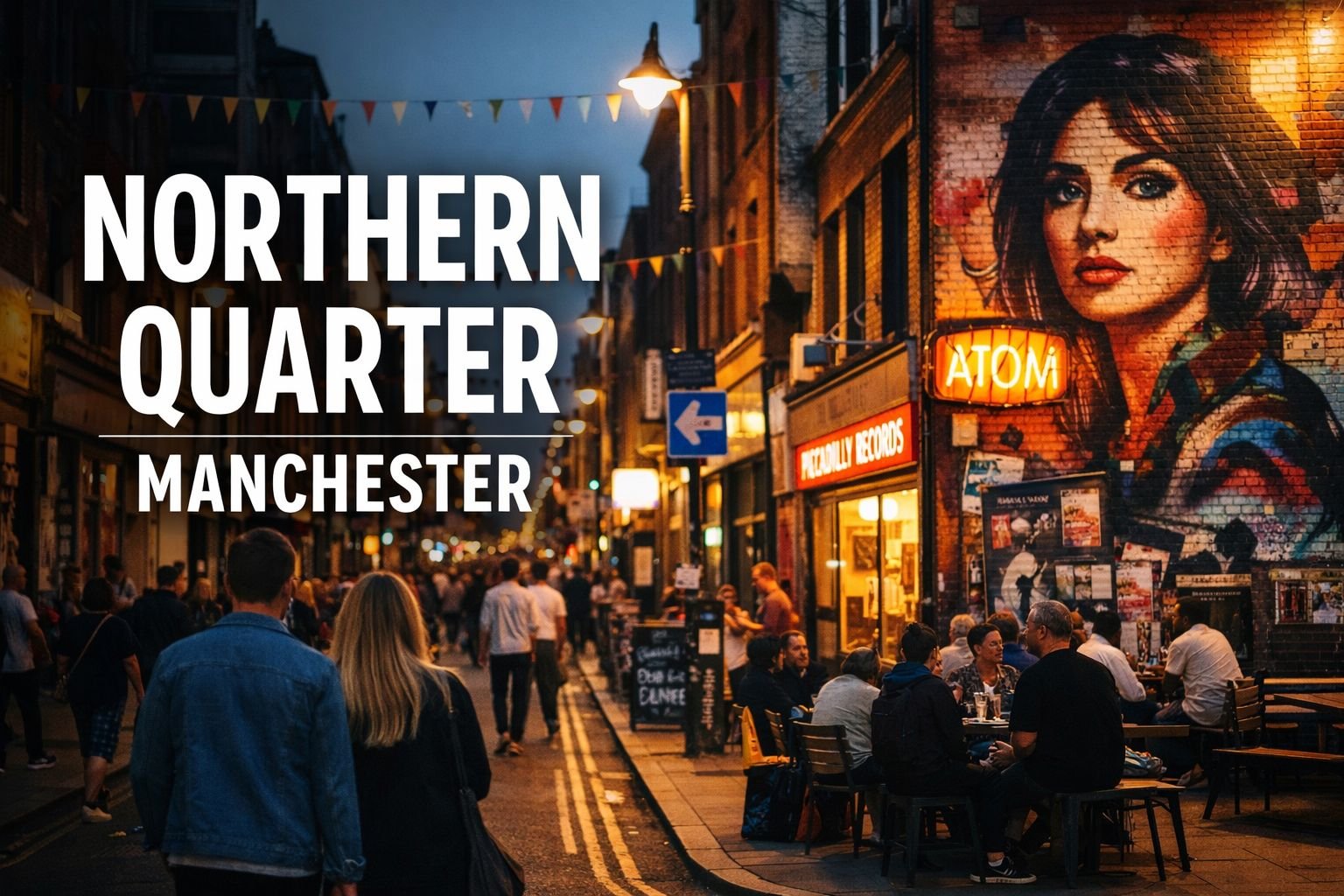
Walk down Oldham Street on a weekday afternoon and the character of Northern Quarter Manchester reveals itself quickly. Independent record shops trade opposite vintage clothing stores. Coffee roasters operate from Victorian warehouses once tied to the cotton trade. Street art spreads across red-brick facades that have witnessed more than two centuries of reinvention.
This is not Manchester’s polished, glass fronted commercial centre. Northern Quarter Manchester represents something increasingly rare in British cities: a neighbourhood shaped gradually by artists, musicians, independent traders and residents rather than dictated by a single masterplan. It is a place where cultural memory, commerce and experimentation continue to coexist—sometimes uncomfortably, often productively.
Beneath the surface charm sits a deeper story of industrial power, decline, grassroots regeneration and an ongoing negotiation between independence and growth.
From Cotton Capital to Counter Culture
The area now recognised as Northern Quarter Manchester emerged from the city’s industrial engine room. When Richard Arkwright opened Manchester’s first cotton mill in 1783, the surrounding streets became part of a rapidly expanding manufacturing network. By the mid-19th century, textile warehouses and small workshops dominated the district, generating enormous wealth alongside overcrowding and harsh working conditions.
Smithfield Market, established in 1821, expanded steadily until it covered more than four acres, drawing thousands of traders each week. Tib Street developed its own identity, eventually becoming famous for specialist animal and pet shops that attracted visitors from across the region.
Stevenson Square, now a social focal point, began life as a speculative residential development in the late 18th century. Commercial reality prevailed, and by the Victorian era the square had become a hub for warehouses, meetings and public gatherings. Political rallies and suffrage events took place here long before cafés and bars arrived.
Decline and the Conditions for Reinvention
By the 1970s, Northern Quarter Manchester had slipped into economic marginality. The closure of Smithfield Market, combined with the opening of the Arndale Centre, redirected footfall away from surrounding streets. Businesses closed, buildings deteriorated and rents fell sharply.
What appeared to be terminal decline proved to be fertile ground for reinvention. Cheap space attracted artists, musicians and small entrepreneurs willing to take risks. Studios appeared above shops. Independent retail replaced wholesale trade. Crucially, this change was incremental rather than imposed.
The Regeneration That Reshaped the Area
A pivotal moment arrived in 1982 with the opening of Afflecks Palace inside a former department store. Designed as an indoor market for independent traders, it provided a permanent base for alternative retail and subculture at a time when much of the city centre struggled.
Through the 1990s, Northern Quarter Manchester gained momentum. Housing followed retail. Cafés and venues followed residents. City-led regeneration focused on reuse rather than replacement, allowing much of the historic building stock to remain intact.
Music culture played a central role. Small venues nurtured emerging acts, while the wider Manchester scene reinforced the area’s creative reputation. This cultural infrastructure helped anchor the neighbourhood through periods of economic uncertainty.
Independent Retail as an Economic Model
Independence in Northern Quarter Manchester is structural rather than cosmetic. Shops tend to trade on knowledge and curation rather than volume. Staff are expected to advise, not upsell. Customers arrive looking for expertise rather than algorithms.
Afflecks continues to house dozens of independent traders, demonstrating the commercial viability of alternative retail. Elsewhere, design studios, vintage clothing stores and specialist music shops operate within walking distance of one another, forming a dense, mutually supportive ecosystem.
This concentration is key. Businesses benefit not just from footfall, but from proximity to like-minded operators who attract the same audience.
Coffee, Food and the All-Day Economy
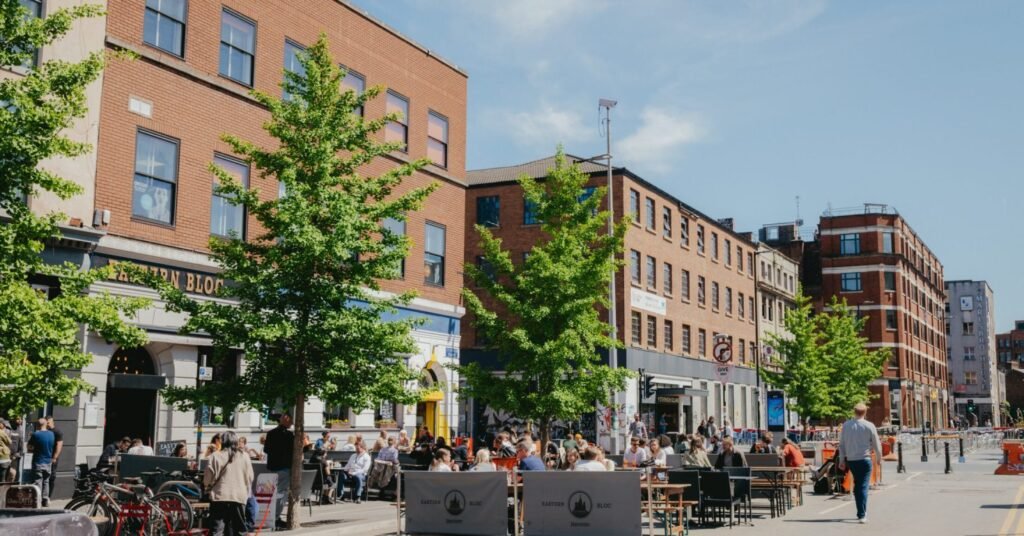
Food culture in Northern Quarter Manchester reflects the same principles. The area is dominated by independent cafés and small restaurants that prioritise consistency over spectacle. Coffee is treated as a craft rather than a commodity, with roasters and cafés developing loyal local followings.
Restaurants tend to be compact, experimental and owner-operated. Menus change. Concepts evolve. Failure, when it happens, is absorbed quietly into the street rather than replaced by chains. This churn, while challenging for operators, keeps the area culturally responsive.
Nightlife Rooted in Music and Community
After dark, Northern Quarter Manchester reveals another layer. Bars and venues range from long established institutions to newer arrivals, but the most successful share a refusal to follow formulaic trends.
Live music remains central. Small stages and basement rooms continue to provide early platforms for emerging artists. Noise complaints and development pressures have tested this ecosystem, but community support has repeatedly demonstrated the value placed on cultural infrastructure.
Street Art as Living Record
Street art in Northern Quarter Manchester functions as both expression and documentation. Murals appear, change and disappear, responding to social issues and shifts in the neighbourhood itself. Large-scale works sit alongside smaller interventions, creating an informal public archive.
This visual layer reinforces the sense that the area is unfinished open to reinterpretation rather than fixed branding.
Why Locals Stay Loyal
For residents and regulars, the appeal of Northern Quarter Manchester lies in familiarity without stagnation. Streets evolve gradually. New businesses open alongside long standing ones. The area changes, but not all at once.
Living here often means accepting density, noise and unpredictability in exchange for walkability, cultural access and a strong sense of place.
How It Compares Within Manchester
Compared with more corporate districts, Northern Quarter Manchester remains deliberately uneven. Where Spinningfields prioritises polish and Ancoats leans residential, the Northern Quarter stays mixed-use in the truest sense: people live, work, socialise and create within the same blocks.
That lack of a single identity has become its defining strength.
Development Pressures and the Road Ahead
Ongoing development poses familiar questions. New housing brings residents and spending power, but also raises rents and alters the commercial mix. Local campaigns and planning scrutiny have slowed some excesses, but tension remains.
The future of Northern Quarter Manchester will depend on whether growth can continue without erasing the informal networks that sustain it.
Read More: Fenix Manchester: The Greek Restaurant Dividing Opinion in the City Centre
Practical Visiting Notes
The area is compact and walkable, with Piccadilly Station and multiple tram stops nearby. Weekend afternoons are busiest, particularly around Stevenson Square. Early mornings and weekday evenings offer a quieter view of the neighbourhood’s daily rhythms.
Final Perspective
In a city defined by reinvention, Northern Quarter Manchester continues to function as a testing ground. It absorbs pressure, experiments publicly and occasionally pushes back. That ongoing negotiation between past and future, independence and growth is precisely what keeps it relevant.
FAQs
What is Northern Quarter Manchester known for?
Independent shops, music venues, street art and a strong creative economy.
Is Northern Quarter Manchester good for nightlife?
Yes. It offers a wide range of independent bars and live music venues.
Is it expensive compared to other areas?
Prices have risen, but it remains more accessible than many central districts.
Is Northern Quarter Manchester safe to visit?
It is generally busy and well lit, particularly in the evenings.
How is it different from Ancoats or Spinningfields?
It is less polished, more mixed-use and culturally driven.
Read More: Knoops in Manchester: Why a Premium Hot Chocolate Café Is Succeeding on Cross Street
