

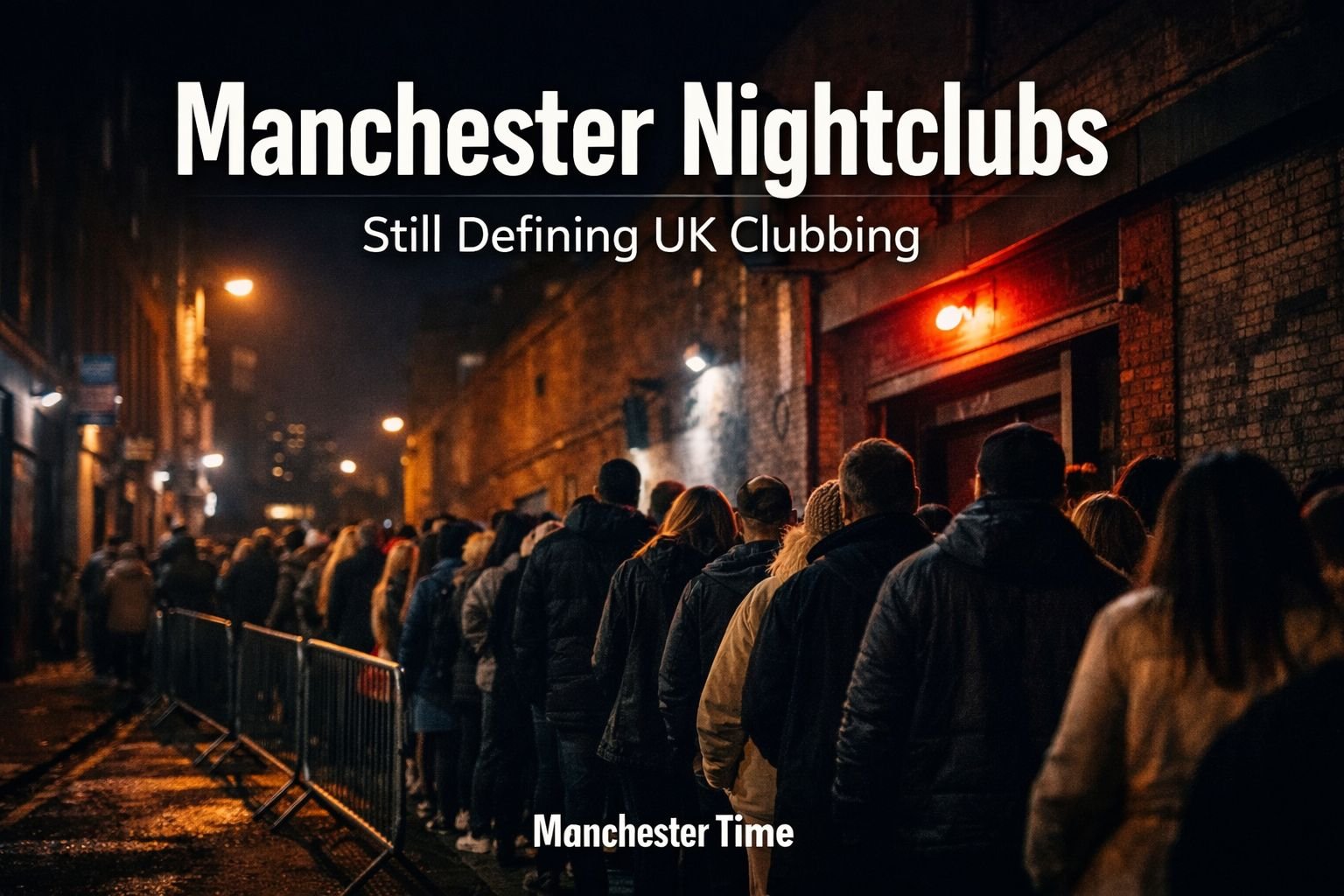
At 1am on a Saturday, the queue outside Hidden stretches past the old Strangeways skyline. Phones stay in pockets. Nobody is rushing. They are here to disappear into bass-heavy rooms until morning. That scene captures Manchester nightclubs in 2025 music-first, unpolished, and deliberately resistant to gimmicks.
While other UK cities chase bottle service and social-media gloss, Manchester’s clubbing culture remains rooted in sound systems, DJs, and collective energy. It is not louder than London or cheaper than Leeds, but it is more serious about what happens on the dancefloor.
Why Manchester Nightclubs Still Matter Nationally
Manchester has repeatedly ranked among the UK’s strongest nightlife cities, but reputation alone does not sustain relevance. What keeps Manchester nightclubs culturally central is consistency: promoters who book for credibility, crowds that understand music, and venues willing to prioritise atmosphere over margins.
The city’s nightlife works on local logic. Arrive before midnight and it feels empty. Turn up too late and doors close fast. Wear heels and you will regret it by 2am. These unwritten rules are rarely explained online, but locals follow them instinctively.
Manchester’s Clubbing Geography Explained
Deansgate Locks: Gateway, Not Destination
Deansgate Locks remains a common entry point, particularly for students and first-timers. Once the default Friday night, the area now feels transitional. High footfall and promotional deals keep venues busy, but music programming is rarely the draw.
Most experienced clubbers start here briefly, then move on.
Northern Quarter: Music-Led and Crowd-Driven
The Northern Quarter continues to anchor Manchester’s alternative and DJ-led scene. Smaller rooms, earlier arrivals and genre-specific nights define the area. Dress codes are relaxed, but engagement is not.
This is where Manchester nightclubs feel local rather than transactional.
Underground Anchors That Still Define the Scene
Hidden
Hidden remains one of the city’s most respected venues. Spread across multiple industrial rooms, it specialises in house, techno and disco. Peak time starts after midnight and runs until close. Tickets are affordable, queues are real, and sound quality is the priority.
The White Hotel
Operating near the Salford border, The White Hotel represents Manchester’s most uncompromising underground space. Limited capacity, experimental bookings and late finishes attract a crowd that values curation over convenience.
These venues are not tourist-friendly by design. That is the point.
The Warehouse Project: Scale Without Selling Out
The Warehouse Project
Running seasonally from autumn through New Year, The Warehouse Project remains unmatched in the UK. Its home at Depot Mayfield allows multiple rooms, distinct moods and festival-level production without losing musical credibility.
Tickets sell quickly and prices are higher, but for many, The Warehouse Project defines Manchester’s modern club calendar.
Oxford Road and the Student Core
Oxford Road continues to serve Manchester’s student population, offering high-energy nights, low entry fees and predictable scheduling. Midweek dominates here. Music policy is broad, crowds arrive earlier, and turnover is fast.
For visitors, this area offers value. For locals, it serves a specific purpose rather than a defining one.
What Locals Know That Visitors Don’t
Timing matters.
Most Manchester nightclubs peak between 1am and 3am. Serious crowds arrive late and stay.
Dress codes still exist.
Trainers are widely accepted, but effort is expected. Sportswear and full tracksuits remain a risk in central venues.
Queues are strategic.
A long queue at midnight often moves. The same queue at 2am may not.
Prices, Safety and Reality in 2025
A typical night now costs more than pre-pandemic years:
- £5 to £15 entry
- £5 to £7 drinks in music-led venues
- Premium nights significantly more
Security presence is visible, particularly in the Northern Quarter and Gay Village. Awareness around drink safety has increased, and staff response times are generally strong. Late-night transport relies on buses and licensed taxis, with trams stopping earlier.
Manchester’s Clubbing DNA
Manchester nightclubs did not emerge by accident. The lineage runs from the Haçienda through warehouse raves to today’s industrial spaces. While venues have closed and reopened, the philosophy remains intact: music over spectacle.
Even newer clubs adopt this ethos through phone-free policies, stripped-back interiors and long DJ sets. The result is a city where clubbing still feels participatory rather than performative.
Is Manchester Still the UK’s Clubbing Capital?
Manchester is not the biggest, cheapest or latest-closing city in the UK. London offers scale. Berlin offers freedom. Manchester offers balance: credibility, accessibility and depth.
For electronic music fans, few UK cities deliver a stronger combination of venues, crowds and programming.
Final Verdict
Manchester nightclubs in 2025 are sharper, stricter and more intentional than before. The city rewards those who understand timing, music and crowd dynamics. It does not chase trends, and it does not apologise for that.
For anyone who values atmosphere over optics and sound over spectacle, Manchester remains one of the UK’s most serious clubbing cities and still sets the standard others follow.