

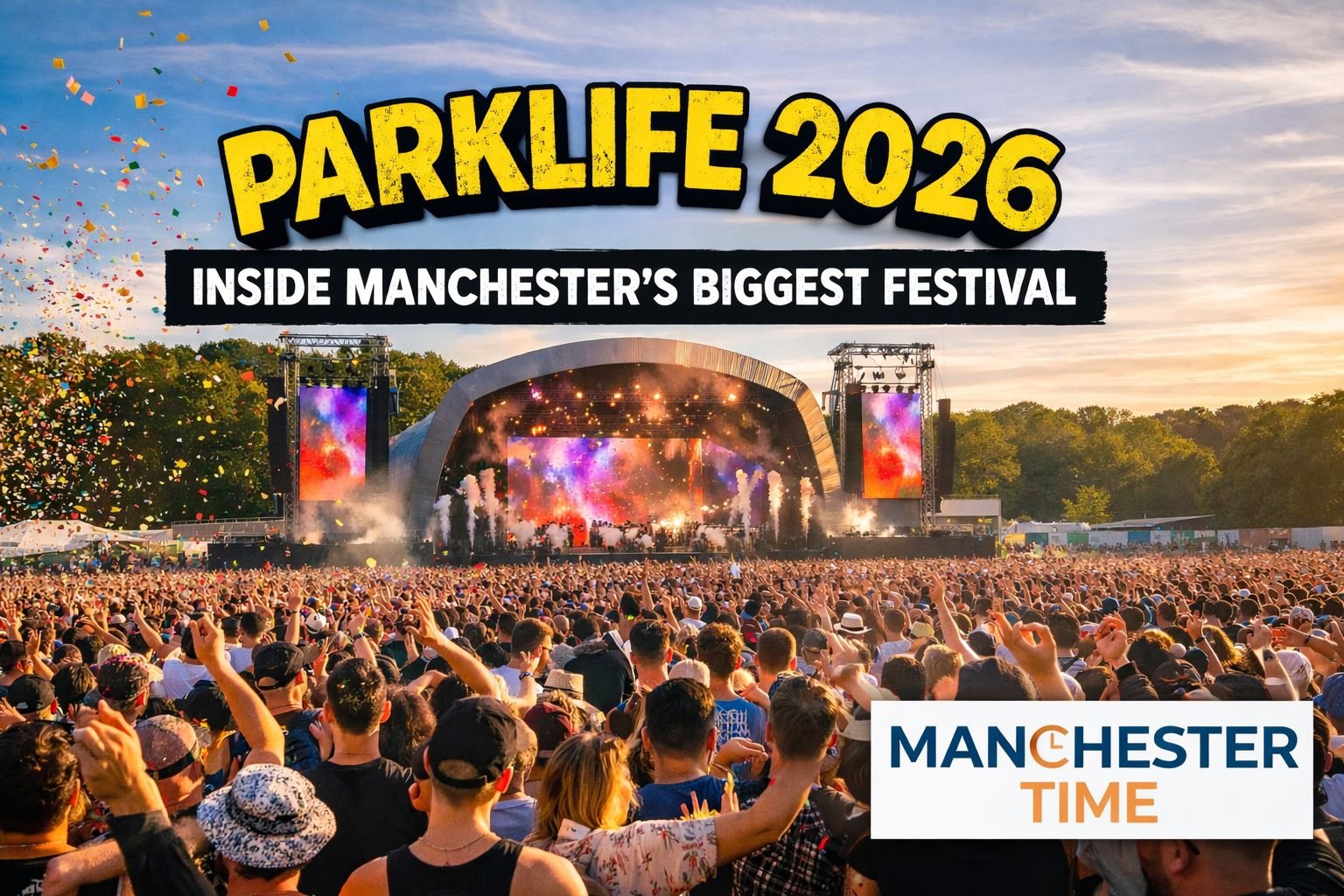
Every June, Manchester adjusts its routines. Trams run fuller earlier, roads around Prestwich tighten, and Parklife Festival transforms Heaton Park from public green space into the busiest festival site in the North of England.
With parklife 2026 approaching, interest is already high. Searches around the parklife lineup, parklife tickets, and what is actually different this year are climbing fast. This guide is written for that moment. Not promotional. Not theoretical. This is how Parklife works in reality, and how it fits into the city that hosts it.
What Parklife Really Is
Parklife did not begin as a national juggernaut. It started life in 2007 as the Mad Ferret Festival in Platt Fields Park, organised by Manchester students and drawing around 10,000 people. Acts such as The Streets and Finley Quaye reflected a city experimenting with outdoor music events at scale.
The modern festival emerged in 2010, when Sacha Lord, co founder of The Warehouse Project, recognised its growth potential. Attendance rose quickly, and by 2012 the event had outgrown Fallowfield. The move to Heaton Park allowed daily capacity to expand to 80,000, where it has remained ever since.
What sets parklife apart is its metropolitan format. This is not a camping festival that builds a temporary village. It is a city event. Most attendees sleep at home or in hotels and move in and out of the park each day. That structure defines the atmosphere, the crowd flow, and the logistical pressure placed on Manchester itself.
Parklife and Manchester’s Music Identity
Parklife is inseparable from the city that hosts it. The festival draws directly from Manchester’s club culture, from the Haçienda era through to The Warehouse Project and modern electronic nights.
The sound of park life is not nostalgic. It prioritises electronic music, grime, hip hop and pop crossover acts that reflect how young audiences in the UK actually listen to music now. It does not attempt to please every demographic, and that focus is part of its success.
The Parklife Lineup for 2026
The parklife 2026 lineup continues this approach. Calvin Harris returns to headline Saturday night, marking his first Manchester appearance since 2013. His booking bridges underground credibility and mass appeal, signalling the festival’s confidence in competing with the UK’s largest events.
Sammy Virji’s promotion to headliner reflects Parklife’s long running commitment to emerging UK talent. Skepta’s presence reinforces the festival’s relationship with grime, a genre it has supported since its early years. Zara Larsson adds international pop reach without shifting the festival’s core identity.
Beyond the headlines, the depth of the parklife lineup matters just as much. Artists such as Josh Baker, Chris Stussy and Kettama underpin the house and techno programme, while Nia Archives represents the ongoing jungle revival. Smaller stages and takeovers ensure specialist scenes are not sidelined.
What Is New for Parklife 2026
The most visible change for parklife 2026 is the PANORAMA Stage, an evolution of the former Hangar Stage. It features a curved full width LED screen, multi tier dance platforms and controlled sightlines designed to manage crowd density more effectively.
Capacity remains capped at 80,000 per day. Organisers have confirmed that Heaton Park cannot expand further without unacceptable impact on surrounding neighbourhoods. The focus for 2026 is efficiency rather than growth.
Parklife Tickets and Value for Money
Parklife tickets remain competitively priced compared with other major UK festivals. Weekend passes start at £139.50, with day tickets from £85 and payment plans available. In an era of rising festival costs, Parklife continues to target students and young professionals.
Value depends on expectations. This is not a comfort focused event. Bar queues are long at peak times, toilets are busy, and seating is limited. For attendees prioritising sound quality, lineup strength and production scale, the pricing still holds up well.
VIP upgrades offer faster entry, separate toilet facilities and elevated viewing areas, but the core experience remains in the main arena. The intensity is part of the design.
Entry, Crowds and On Site Reality
Entry is fastest before midday. Between 14:00 and 16:00, queues can be substantial, particularly for standard ticket holders. Security checks are thorough, with bag searches and metal detectors creating bottlenecks.
Inside the park, crowd density increases sharply for headline sets. Movement between stages is possible, but planning matters. Experienced attendees know when to arrive early and when to avoid peak transitions.
Transport, Policing and Local Impact
Transport is the most visible pressure point. Heaton Park Metrolink stop closes at 21:00, pushing attendees towards Bowker Vale or long walks back towards Manchester city centre. Shuttle buses run in partnership with Transport for Greater Manchester, but post event queues are unavoidable.
Road closures begin early evening. Junctions 19 and 20 of the M60 are heavily managed, with restrictions designed to prevent congestion spilling onto residential streets. Residents around Sheepfoot Lane and Bury Old Road rely on permit parking schemes that expand annually.
Policing is significant but controlled. Over 1,000 security staff work across the site, supported by Greater Manchester Police. Arrest numbers have fallen since the mid 2010s, reflecting tighter crowd management rather than reduced enforcement.
The impact on local residents remains contentious. Noise monitoring is continuous, and the festival has remained within permitted limits in recent years. However, for two days each summer, Heaton Park ceases to function as open public space. That tension has never fully disappeared.
How Parklife Compares to Other UK Festivals
Compared with rural camping festivals such as Glastonbury or Creamfields, parklife concentrates pressure into shorter windows. Attendees arrive and leave within hours, rather than over days, placing strain on transport and policing.
In return, Parklife offers accessibility. There is no need for camping equipment, long drives or days off work. That trade off defines its audience and its critics.
Who Parklife Is For and Who It Is Not
Parklife suits younger audiences comfortable with urban crowds and long days on their feet. It works for those who see festivals as an extension of club culture rather than an escape from the city.
It is not designed for families, nor for attendees seeking quiet spaces or pastoral settings. The pace is fast, the crowd is dense, and the environment is deliberately intense.
The Verdict
Parklife 2026 will once again be Manchester’s largest metropolitan festival. It balances commercial headliners with cultural credibility and continues to operate at the physical limits of Heaton Park.
For attendees who understand the trade offs, Parklife remains one of the UK’s most relevant and accurately curated festivals. For the city, it is both a cultural asset and a logistical challenge. That balance is not new, but it remains central to what Parklife is and why it continues to matter.
Read More: Why Manchester Nightclubs Still Define British Clubbing in 2025