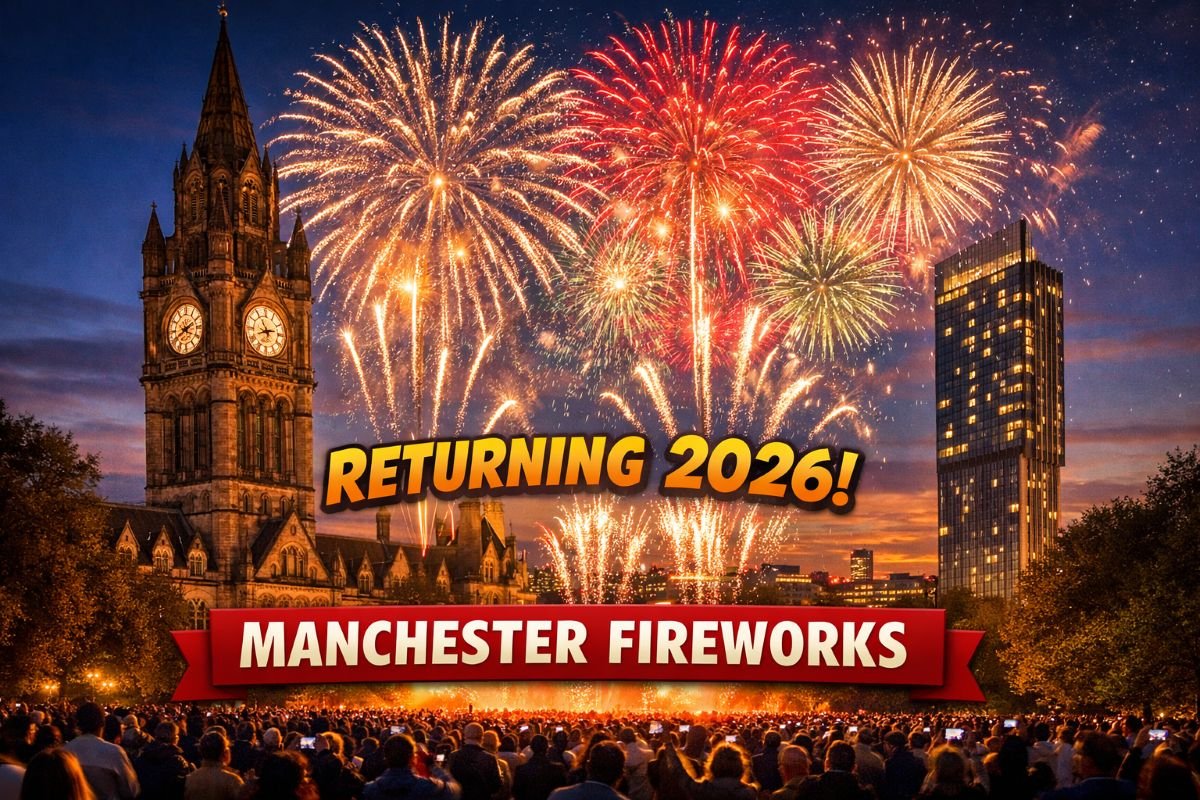
Firework displays are set to return to Manchester’s green spaces after a seven-year hiatus, marking a major shift in the city council’s approach to community events and signalling what many residents see as the end of a long period of austerity.
The return of Manchester fireworks was confirmed in late November, with free, council-organised displays planned from Bonfire Night 2026. The move restores a tradition that once drew more than 150,000 people a year to parks across the city, including Heaton Park, Platt Fields and Wythenshawe Park.
A Long Awaited Comeback
For generations of families, November meant gathering in local parks to watch fireworks light up the skyline. At their peak in 2011, council displays attracted more than 151,000 people across eight locations. Heaton Park alone regularly drew crowds of around 50,000, while Wythenshawe and Platt Fields welcomed between 35,000 and 50,000 spectators each.
The events were free, family focused and firmly embedded in the city’s cultural calendar. Parents who attended as children returned years later with their own families, creating traditions that spanned decades.
When the displays ended in 2019, initially due to Covid-19, the impact was immediate. What followed was a surge in complaints about unregulated private fireworks in residential streets, often late at night, frequently illegal, and with little regard for safety, pets or neighbours.
Why the Displays Were Cancelled
The suspension of Manchester fireworks became permanent as budget pressures mounted. Funding was redirected toward smaller, year round community activities rather than large seasonal events, a decision shaped by years of reduced central government support.
Council leader Councillor Bev Craig acknowledged the importance of the return, saying the city knows “generations of Mancunians have enjoyed council organised displays” and that free events remain a powerful way to bring communities together.
The improved financial position follows changes to how council funding is allocated, reconnecting budgets to levels of local need. While final figures will be confirmed later this year, the shift has allowed the authority to reverse some of the most visible cuts made during austerity.
Where Fireworks Are Likely to Return
Historically, Manchester City Council staged displays at eight parks:
- Heaton Park
- Platt Fields Park
- Wythenshawe Park
- Cringle Park
- Debdale Park
- Brookdale Park
- Crumpsall Park
- Philips Park
Final locations for 2026 have not yet been confirmed, but announcements are expected closer to autumn. In previous years, the largest crowds were drawn to Heaton Park, Wythenshawe Park and Platt Fields, with smaller neighbourhood displays held earlier in the week.
The aim was accessibility, ensuring families across north, south and east Manchester could attend a display close to home.
Read More: Dismoneyfied: Why Manchester Businesses Are Building Profitable Companies Without Chasing Investment
What Residents Can Expect
Based on past events, gates typically opened from around 5pm, with fireworks beginning at approximately 7:30pm. Many sites included funfairs, food stalls and designated family areas, with alcohol-free policies and visible security.
Parking was limited, and residents were encouraged to use public transport or walk where possible. Larger parks offered blue badge parking and stewarded access points, though early arrival was advised due to crowd size.
At peak locations, tens of thousands of people attended, making planning essential for families with young children or mobility needs.
Legal Framework and Safety Rules
Fireworks are tightly regulated. It is illegal to set them off between 11pm and 7am on most nights, with later cut-offs only permitted on Bonfire Night, New Year’s Eve, Diwali and Chinese New Year.
It is also illegal to set off fireworks in public places such as streets, pavements or parks. Breaches can result in fines of up to £5,000 or imprisonment, with fixed-penalty notices also enforceable.
Retail sales are limited to specific periods unless a seller holds a year-round licence, and under-18s cannot legally buy or possess adult fireworks in public.
Fire services continue to advise attending organised displays rather than private garden events, where most injuries occur.
Impact on Pets and Vulnerable Residents
Animal welfare organisations broadly support the return of organised Manchester fireworks, arguing that scheduled, well-publicised events are far preferable to weeks of unpredictable private displays.
Dogs, cats and horses are particularly sensitive to sudden noise, and research suggests nearly half of all dogs show signs of distress during fireworks. Organised events allow owners to prepare, while random late night fireworks do not.
Unexpected explosions can also affect people with PTSD, autism or sensory sensitivities. Clear communication and advance notice allow residents to plan, avoid affected areas or take protective measures.
Environmental and Community Considerations
Fireworks remain controversial. Temporary spikes in air pollution and concerns over noise, debris and wildlife disturbance continue to fuel debate. However, centralised displays may reduce the overall number of private fireworks used across the city, potentially limiting cumulative impact.
Council figures have indicated they will work with local councillors and businesses to manage disruption, particularly in busy residential areas and around transport hubs.
What Only a Local Knows
The return of Manchester fireworks is about more than Bonfire Night. It reflects a broader shift in how the city sees itself after a decade of cuts.
Between 2010 and 2020, Manchester was among the hardest hit councils in the country. Fireworks were classed as non-essential, and the city pivoted toward smaller neighbourhood events. While well-intentioned, that approach never fully replaced the sense of shared identity created by large, city wide celebrations.
Private fireworks filled the gap, but brought problems with noise, safety and anti-social behaviour. The decision to restore council-run displays is both a cultural and political statement: a signal that the city believes it can be ambitious again.
Looking Ahead to Bonfire Night 2026
Bonfire Night 2026 falls on Wednesday, 5 November. Final details on locations, timings and transport arrangements are expected by late summer.
Residents are advised to follow official council updates and prepare for increased crowds and travel demand near major parks. Ticketed private displays hosted by sports clubs and community groups will also continue across Greater Manchester.
A New Chapter for the City
The return of fireworks to Manchester’s parks marks a symbolic turning point. After years of constraint, the city is reinvesting in free, large-scale events that bring people together.
For families gathering under the night sky next November, the fireworks will be more than a spectacle. They will mark a city reclaiming a shared tradition and a sense of collective celebration that many feared had been lost for good.
Read More: Rob Brydon Tour: What Manchester Audiences Can Expect From His Next UK Live Shows