

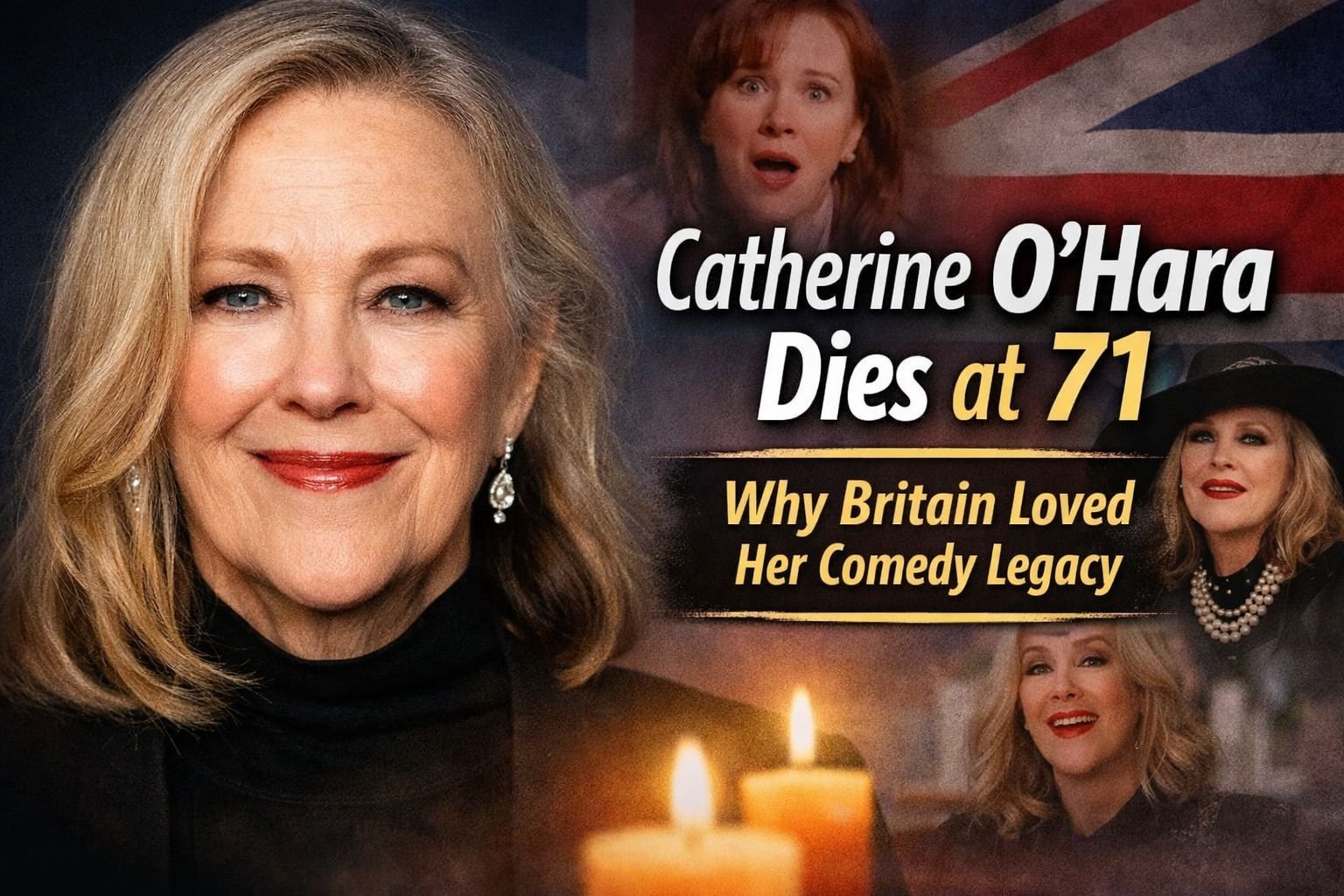
The news confirmed on Friday evening sent ripples through UK streaming platforms and social media timelines alike. Catherine O’Hara, the Emmy winning actress whose career spanned five decades and multiple generations of comedy, died at her Los Angeles home following a brief illness. She was 71.
For British audiences, particularly those who discovered her through Netflix or annual Christmas broadcasts of Home Alone, the loss feels unexpectedly personal. O’Hara occupied a distinctive place in UK entertainment culture: never aggressively marketed here, yet deeply embedded in viewing habits through work that travelled across borders and platforms with unusual ease.
The UK connection beyond Home Alone
Catherine O’Hara reach into British homes has long been underestimated. Home Alone, which topped a 2025 BBFC survey as the UK’s favourite Christmas film with 20 per cent of the vote, has become as much a British seasonal tradition as an American one. Its regular Christmas scheduling on terrestrial television and streaming platforms means her performance as the frazzled Kate McCallister returns to UK living rooms every December with near-ritual consistency.
That familiarity laid the groundwork for a second wave of recognition years later.
How Schitt’s Creek changed her UK standing
It was Schitt’s Creek, the Canadian sitcom that gained momentum in the UK after arriving on Netflix in 2017, that introduced O’Hara to a new generation of British viewers. Initially airing quietly on 4Music, the series found its audience through streaming, where word of mouth transformed it into a late-blooming hit.
Her portrayal of Moira Rose proved central to that success. Absurd on the surface yet emotionally precise underneath, the character felt unusually compatible with British comedy traditions that celebrate eccentricity without mockery.
Moira Rose and British comedy sensibilities
Catherine O’Hara performance resonated in the UK because it echoed something familiar. Moira’s indeterminate accent, exaggerated diction and theatrical self-importance aligned with a long British tradition of character-led comedy, where commitment matters more than realism.
Dan Levy, who co-created the series, once noted that Catherine Catherine O’Hara redefined what older female characters could be on screen. That approach has long been accepted, even expected, in British comedy, where women are allowed to be ambitious, ridiculous and emotionally complex without being sidelined.
By the time the final season arrived on Netflix in October 2020, British viewers were consuming the series alongside American audiences, cementing its place in UK pop culture.
Read More: Rob Brydon Tour: What Manchester Audiences Can Expect From His Next UK Live Shows
The Christopher Guest films and a transatlantic comic language
Catherine O’Hara collaborations with Christopher Guest in mockumentaries such as Waiting for Guffman, Best in Show and A Mighty Wind also found a natural home with British audiences. Guest’s own British background helped shape a comic style that influenced UK television long before it became mainstream.
The mockumentary format these films refined later informed British successes such as The Office, People Just Do Nothing and This Country. Catherine O’Hara ability to improvise while maintaining emotional sincerity made her an essential figure in this shared Anglo-American comic lineage.
Late career relevance on UK streaming platforms
Her final screen roles underlined how relevant she remained to UK viewers. Apple TV+ featured O’Hara in The Studio, Seth Rogen’s Hollywood satire that premiered in 2025, at a time when the service was strengthening its position in the British market through quality-driven originals.
She also appeared in the second season of The Last of Us, airing in the UK on Sky and NOW, reminding audiences of her dramatic range beyond comedy.
Why Catherine O’Hara death resonates in the North
In Manchester and across the North of England, where comedy traditions value authenticity and character, O’Hara’s approach felt instinctively familiar. She never softened performances for audience approval. Whether playing a pretentious sculptor in Beetlejuice or a fallen soap star in Schitt’s Creek, she committed fully, trusting viewers to find the humanity beneath the absurdity.
That sensibility mirrors Northern comedy staples such as Phoenix Nights, Early Doors and The Royle Family, where humour is rooted in recognisable behaviour rather than punchlines alone.
A legacy that will endure on UK screens
The reaction from colleagues has reflected the scale of her influence, but the clearest measure of O’Hara’s legacy may be how quickly British audiences return to her work. Her catalogue now spans multiple platforms, reflecting how viewing habits have shifted from scheduled broadcasts to algorithm-driven discovery.
For older viewers, she will remain synonymous with Christmas television. For younger audiences, Moira Rose will continue to circulate through clips, quotes and repeat binges. What connects both groups is the durability of her performances.
In an entertainment landscape increasingly shaped by data and predictability, Catherine O’Hara represented something rarer: a performer willing to take risks, trust intelligence, and embrace eccentricity without irony. For UK audiences, that combination ensured her work never felt imported it felt understood.
Read More: Michelle Keegan Netflix: How a Stockport Star Became One of Britain’s Most Powerful Streaming Leads