


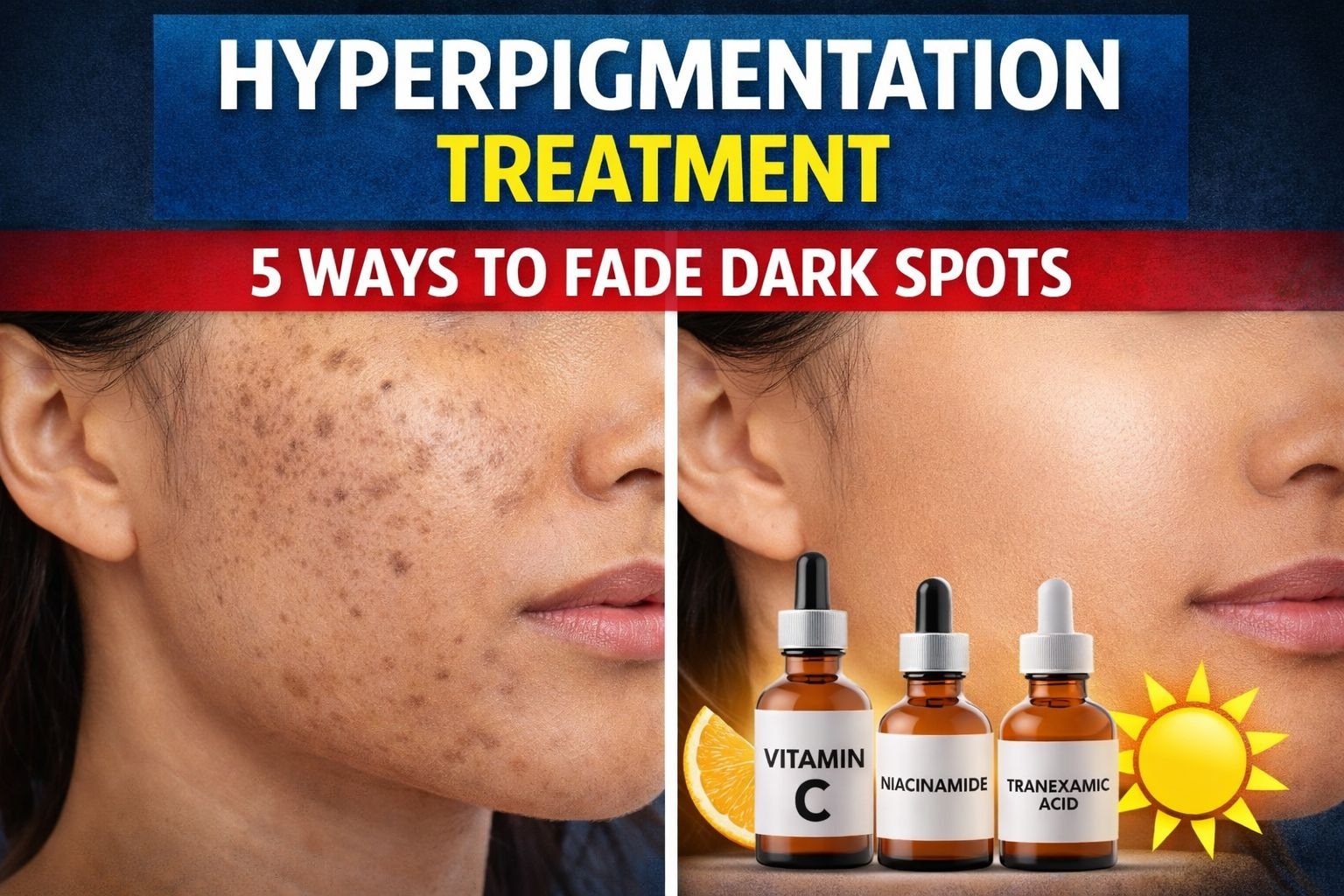
Hyperpigmentation treatment requires combining clinically proven ingredients with realistic timelines. Most effective treatments show initial results within 2-4 weeks, with significant improvement requiring 8-12 weeks of consistent daily use alongside strict sun protection for optimal melanin reduction.
Understanding Hyperpigmentation Treatment Timelines
Dark spots are not created equal and neither are their treatment timelines. Surface-level post-inflammatory hyperpigmentation (PIH) responds faster than deep dermal melasma, which can persist for months or years without proper intervention.
According to research published in January 2026, combination treatments achieve approximately 30-33% reduction in hyperpigmentation within 8-12 weeks when paired with daily photoprotection. However, melasma treatment often requires longer commitment sometimes 6 months or more for substantial improvement.
The key difference between treatments that work and those that disappoint? Realistic expectations paired with evidence-based ingredient selection.
Treatment Timeline by Pigmentation Type
| Hyperpigmentation Type | Typical Timeline | Success Rate with Consistent Treatment |
|---|---|---|
| Post-inflammatory hyperpigmentation (PIH) | 4-8 weeks | 70-81% reduction in 12 weeks |
| Superficial sun damage | 2-4 weeks initial, 8-12 weeks significant | 60-70% improvement |
| Melasma (dermal) | 12-24 weeks minimum | 27-60% reduction (requires maintenance) |
| Stubborn dermal melasma | 6-12+ months | Variable (often requires combination therapy) |
Thiamidol: The Gold Standard Endorsed by Global Experts
Thiamidol (isobutylamido thiazolyl resorcinol) is not just another trending ingredient — it represents two decades of clinical research involving over 9,000 participants across 120+ studies.
According to December 2025 expert consensus, leading global dermatologists recommended thiamidol 100% as first-line dermocosmetic active for facial hyperpigmentation and maintenance therapy. This next-generation tyrosinase inhibitor significantly reduces MASI (Melasma Area and Severity Index) scores with minimal irritation compared to traditional alternatives.
Thiamidol works by directly inhibiting tyrosinase the rate limiting enzyme responsible for melanin production. Unlike hydroquinone, which can cause irritation and rebound hyperpigmentation, thiamidol demonstrates superior tolerability across all skin types while delivering comparable efficacy.
Expected timeline: Initial improvements within 2 weeks, significant visible reduction by 4-6 weeks with twice-daily application.
Tranexamic Acid: The Dermatologist-Preferred Alternative
Tranexamic acid is revolutionizing hyperpigmentation treatment by targeting the problem at an earlier stage than traditional tyrosinase inhibitors.
Rather than blocking melanin synthesis directly, tranexamic acid inhibits the communication between melanocytes and keratinocytes, disrupting the pigmentation process before excessive melanin transfer occurs. This unique mechanism makes it particularly effective for melasma — one of the most stubborn forms of hyperpigmentation.
Clinical evidence supports its efficacy: After 12 weeks of use, tranexamic acid decreased melasma severity by 27%, matching hydroquinone’s performance while participants reported significantly higher treatment satisfaction due to fewer adverse effects.
A 12-week Brazilian study involving 55 participants showed that a topical serum containing 3% tranexamic acid, 1% kojic acid, and 5% niacinamide produced significant PIH reduction by week 12. Another study of 42 Korean women demonstrated that twice-daily application of 2% niacinamide + 2% tranexamic acid significantly reduced melasma severity at both 4 and 8 weeks.
Tranexamic acid is not a quick fix most patients notice subtle improvements within 8-12 weeks, with melasma patches progressively fading over several months.
Tranexamic Acid Application Protocol
| Application Time | Recommended Products | Complementary Ingredients |
|---|---|---|
| Morning | Vitamin C serum (wait 5 min) → Tranexamic acid | Antioxidants, niacinamide |
| Evening | Gentle cleanser → Tranexamic acid + kojic acid | Peptides, hyaluronic acid |
| Both AM/PM | Broad-spectrum SPF 50+ (morning only) | Physical blockers (zinc, titanium) |
Kojic Acid: Surface Pigmentation Specialist
Kojic acid delivers targeted results for surface-level pigmentation through direct tyrosinase inhibition. Research demonstrates that 1% kojic acid achieves comparable results to 4% hydroquinone in treating melasma, with significantly fewer side effects.
Most users notice improvements within 2-4 weeks when using products twice daily, with deeper spots requiring 6-8 weeks for visible reduction. However, kojic acid works best on surface pigmentation tranexamic acid targets deeper melasma more effectively.
The combination approach maximizes results: kojic acid addresses existing surface discoloration while tranexamic acid prevents new pigment formation at the cellular communication level. When combined in a serum, these ingredients offer powerful multi-layered pigmentation control.
Clinical studies show that after 12 weeks of combined therapy with tranexamic acid, kojic acid, and niacinamide, participants experienced an average 81% reduction in post inflammatory hyperpigmentation while melasma improved by 60%.
For optimal results, consider pairing kojic acid treatment with gentle exfoliation using products like AyuGlo Tan Remover, which combines pumice, truffle extract, and wine extract to remove built-up dead skin cells while hydrating the complexion.
Niacinamide: The Universal Brightening Booster
Niacinamide (vitamin B3) is not a standalone hyperpigmentation cure, but it functions as the ultimate supporting ingredient that enhances every other treatment’s efficacy while reducing irritation.
This versatile ingredient suppresses melanin transfer from melanocytes to keratinocytes preventing pigment from reaching the skin’s surface even when melanin production continues. Research shows that 5% niacinamide achieves similar efficacy to 4% hydroquinone for melasma with superior tolerability.
Niacinamide works synergistically with virtually all brightening ingredients. A 2002 study found 4% niacinamide significantly reduced hyperpigmentation after 8 weeks, while more recent research demonstrates that combining niacinamide with tranexamic acid and kojic acid produces 81% reduction in PIH after 12 weeks.
Beyond pigment suppression, niacinamide strengthens the skin barrier, reduces inflammation, and improves overall skin health all factors that prevent rebound hyperpigmentation after treatment ends.
Expected timeline: Noticeable improvements in skin texture and mild lightening within 2-4 weeks, significant tone correction after 8-12 weeks of consistent use.
Vitamin C: Antioxidant Protection + Brightening
Vitamin C and its derivatives (ascorbic acid, magnesium ascorbyl phosphate, ascorbyl glucoside) function as potent antioxidants that directly inhibit tyrosinase while neutralizing reactive oxygen species generated by UV exposure.
Vitamin C is most effective when applied in the morning before sunscreen, as it enhances photoprotection while actively preventing UV-induced melanogenesis. Research confirms that vitamin C protects skin from UV radiation and shows better results when combined with other skin-lightening ingredients.
The layering strategy matters: Apply vitamin C serum first thing after cleansing, allow 5 minutes for absorption, then follow with niacinamide (which reduces potential irritation) and finish with antioxidant-rich moisturizer like Lumére Firmé Day Cream, which contains vitamins A, C, and E plus CoQ10 for comprehensive environmental protection.
Vitamin C alone is not sufficient for stubborn hyperpigmentation, but it enhances skin brightening effects when used in combination with kojic acid (evening application), tranexamic acid, or niacinamide. This morning vitamin C + evening kojic acid protocol prevents new damage while actively treating existing discoloration.
Evidence-Based Ingredient Combinations
| Combination | Mechanism | Expected Timeline | Clinical Evidence |
|---|---|---|---|
| Tranexamic acid + Kojic acid + Niacinamide | Multi-pathway inhibition + transfer suppression | 4-12 weeks | 81% PIH reduction, 60% melasma improvement |
| Vitamin C (AM) + Kojic acid (PM) | Antioxidant prevention + direct tyrosinase inhibition | 2-8 weeks | Enhanced brightening vs. monotherapy |
| Thiamidol + Sunscreen | Direct tyrosinase inhibition + photoprotection | 2-6 weeks | 100% expert endorsement as first-line treatment |
| Niacinamide + Any brightening active | Transfer suppression + barrier support | 4-8 weeks | Reduces irritation, enhances efficacy |
The Non-Negotiable: Daily Sun Protection
Sunscreen is not optional when treating hyperpigmentation it’s the foundational element that determines whether your treatment succeeds or fails.
UV exposure triggers melanogenesis (melanin production) within minutes, effectively reversing weeks of treatment progress in a single unprotected afternoon. Daily broad-spectrum SPF 30 or higher prevents further darkening and allows brightening ingredients to work effectively.
Research consistently demonstrates that hyperpigmentation treatments show minimal to no improvement when patients skip daily sunscreen, regardless of ingredient quality or concentration. According to dermatology experts, consistency with sun protection dramatically increases efficacy and decreases rebound pigmentation.
Physical sunscreens containing zinc oxide or titanium dioxide provide superior protection for hyperpigmentation-prone skin compared to chemical filters, as they create an immediate barrier without requiring absorption time.
Apply sunscreen as the final morning step after all treatment serums and moisturizers have fully absorbed. Reapply every 2 hours during extended sun exposure, or immediately after swimming, sweating, or towel-drying.
Frequently Asked Questions
How long does it take to see results from hyperpigmentation treatment?
Most hyperpigmentation treatments show initial improvements within 2-4 weeks of consistent use. However, significant visible reduction typically requires 8-12 weeks of daily application combined with strict sun protection. Stubborn cases like melasma may require 6 months or longer for substantial improvement. The timeline depends on pigmentation depth, ingredient concentration, and adherence to daily sunscreen use.
What ingredient fades hyperpigmentation fastest?
Hydroquinone delivers the fastest results for hyperpigmentation, typically showing improvement within 4-6 weeks when used in triple combination therapy with tretinoin. However, thiamidol (a next-generation tyrosinase inhibitor) is recommended as first-line treatment by global dermatology experts due to superior efficacy-to-safety ratio. Tranexamic acid also shows comparable results to hydroquinone after 12 weeks with fewer side effects and higher patient satisfaction.
Can you layer multiple hyperpigmentation ingredients together?
Yes, layering multiple brightening ingredients is highly effective and often recommended by dermatologists. Combining ingredients with distinct mechanisms targets multiple biological pathways simultaneously. For example, use vitamin C in the morning for antioxidant protection, then apply kojic acid or tranexamic acid in the evening. Niacinamide is compatible with most ingredients and reduces irritation when combined with stronger actives. Always introduce new ingredients gradually to assess tolerance.
Does sunscreen really matter for fading dark spots?
Sunscreen is absolutely essential for treating hyperpigmentation and is not optional. UV exposure triggers melanogenesis (melanin production) within minutes, reversing weeks of treatment progress. Daily broad-spectrum SPF 30 or higher prevents further darkening and allows brightening ingredients to work effectively. Without sun protection, hyperpigmentation treatments show minimal to no improvement regardless of ingredient quality or concentration.
Is kojic acid as effective as hydroquinone for melasma?
Research demonstrates that 1% kojic acid achieves comparable results to 4% hydroquinone in treating melasma after 12 weeks of use, with significantly fewer side effects. Kojic acid inhibits tyrosinase enzyme activity similarly to hydroquinone but with better tolerability. A clinical study showed an average 81% reduction in post-inflammatory hyperpigmentation when kojic acid was combined with tranexamic acid and niacinamide. However, kojic acid works best on surface pigmentation rather than deep dermal melasma.
Read More: FUE vs FUT: Understanding Scarring and Long-Term Aesthetic Outcomes
