


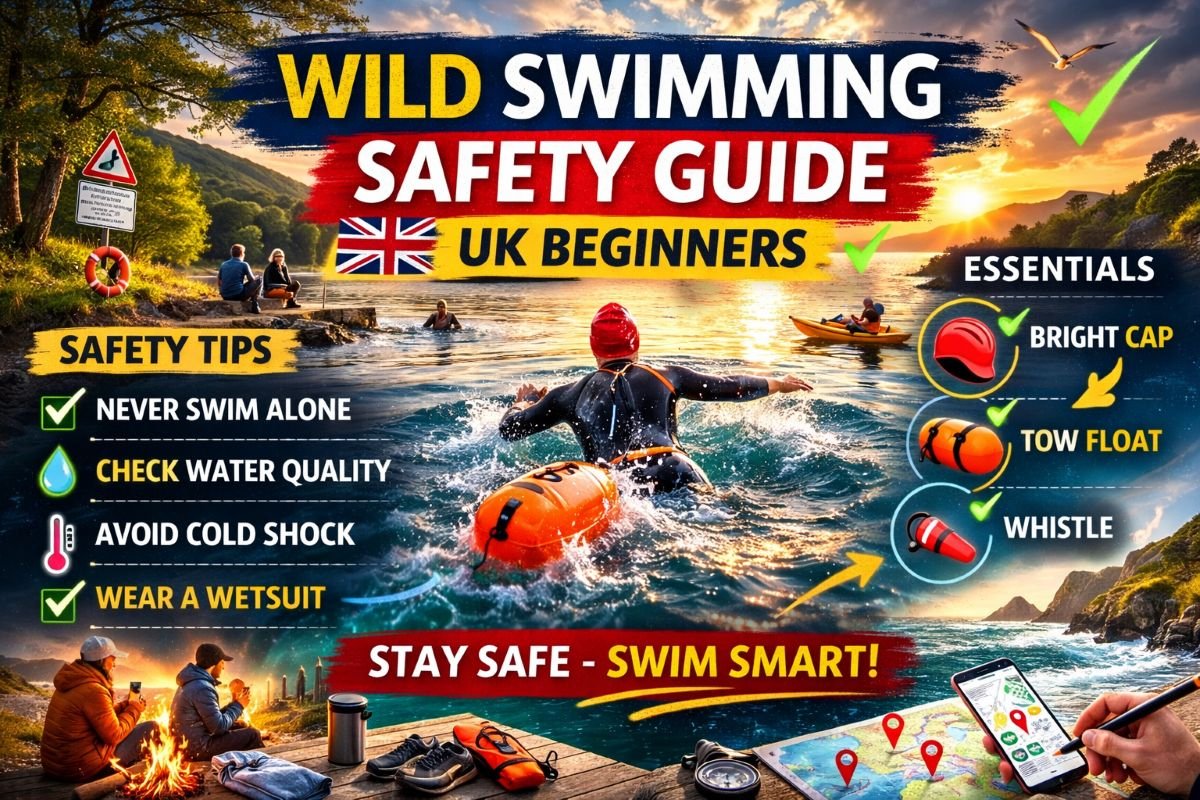
Wild swimming has surged in popularity across Britain, with more than 4 million people participating in open water swimming between 2021 and 2022, including 2.1 million swimming exclusively in ‘wild’ settings such as lakes, rivers, and the sea. While the mental and physical health benefits are well-documented, understanding safety protocols is essential before taking your first plunge into Britain’s natural swimming pools.
Essential Safety Protocols for Wild Swimming Beginners
Never Swim Alone
According to UK drowning statistics, approximately 400 people drown each year, though only a small percentage occurs during actual swimming activities. Of those swimming-related drownings, seven happen in rivers, lakes, and reservoirs combined. The data reveals that 95% of swimming drowning victims are male, with many being teenagers who ventured out without supervision.
Swimming with a companion maximises your safety in several ways. A friend can monitor for signs of distress, help if you encounter difficulty, and provide assistance if cold water shock occurs. If swimming with another person isn’t possible, always trail a bright tow float behind you on a cord and wear a colourful swim cap. Red is the most visible colour against water and vegetation, making it easier for passersby or rescue services to spot you.
Understanding Cold Water Shock
Even during British summers, river and lake water temperatures remain cold enough to trigger cold water shock. This physiological response causes your muscles to seize, breathing to become rapid and uncontrolled, and your heart rate to spike dramatically. Cold water shock is fatal even for strong swimmers if not properly anticipated and managed.
According to the UK Health Security Agency, acclimatisation is key. Enter the water gradually rather than diving or jumping. Focus on controlling your breathing through slow, deliberate inhales and exhales. Wear a wetsuit, particularly during your first wild swimming experiences or in water below 15°C. Limit your initial swims to 5-10 minutes until your body adapts to outdoor water temperatures.
Water Quality Assessment
Only 14% of England’s rivers are classified as being of ‘good’ ecological status according to a 2022 government report. This makes pre-swim water quality checks non-negotiable. Marine conservation charity Surfers Against Sewage provides a free Safer Seas and Rivers Service app that supplies real-time data from water companies and regulators about location safety for bathing.
Designated bathing sites are monitored by the Environment Agency between May and September and are considered safe and clean for swimming. The Swimfo website allows you to find local designated bathing areas and check the latest water quality reports. Always avoid swimming within 48 hours after heavy rain, as this is when sewage, agricultural runoff, and urban pollutants are carried into water bodies.
Wild Swimming Safety Checklist:
| Safety Element | Requirement | Why It Matters |
|---|---|---|
| Swimming companion | Essential (or bright tow float if alone) | Provides rescue capability and visibility |
| Water temperature check | Know temp; wear wetsuit if below 15°C | Prevents cold water shock |
| Water quality app | Check Safer Seas app before entry | Avoids contaminated water |
| Weather conditions | No swimming within 48h of heavy rain | Runoff pollution peaks after rainfall |
| Visibility equipment | Bright cap (red preferred) and tow float | Ensures you can be seen by others |
| Emergency whistle | Attached to tow float or person | Alerts others if difficulty occurs |
Identifying Hazards in Natural Swimming Locations
Hidden Underwater Dangers
Open water swimming presents unique hazards absent from swimming pools. Rivers and lakes may contain submerged shopping trolleys, broken glass, old bicycles, discarded fishing gear, and other debris. Riverbeds can feature sudden depth changes, strong currents, and entanglement hazards like underwater vegetation or fishing line.
Shingle beaches ‘shelve’ quickly, meaning the depth increases dramatically just a short distance from shore. This catches inexperienced swimmers off-guard and can lead to panic. Always enter new locations feet-first rather than diving, regardless of how clear the water appears. Conduct a visual survey of the area, looking for litter, odd water movement patterns, or warning signs before entering.
Read More: 10 Unique Irish Venues for Corporate Retreats
Riverbank and Entry Challenges
According to outdoor swimming safety guidance, riverbanks are often slippery and difficult to climb, particularly after rain. Clay and silt create treacherous surfaces. Steep banks without established entry points present significant exit challenges, especially if you’re fatigued or affected by cold water.
Always identify your exit point before entering the water. Look for gently sloping areas, established steps, or beaches rather than steep banks. Wear appropriate footwear—old trainers or swimming shoes protect feet from sharp stones and provide grip on slippery surfaces. Never assume you can climb out where you entered; currents may carry you downstream.
Common Natural Swimming Hazards:
| Hazard Type | Risk Level | Prevention Strategy |
|---|---|---|
| Cold water shock | High | Gradual entry, wetsuit, breathing control |
| Underwater debris | Medium | Feet-first entry, water quality check |
| Steep/slippery banks | Medium | Identify exit point before entry, proper footwear |
| Water contamination | High | Use quality apps, avoid 48h post-rain |
| Sudden depth changes | Medium | Enter cautiously, survey area first |
| Strong currents | High | Research location, swim parallel to shore |
Britain’s Best Beginner-Friendly Wild Swimming Locations
Scotland’s Natural Pools
Loch Lomond stands as Britain’s largest lake and offers numerous wild swimming opportunities. According to visitor information, the area features kayaking, canoeing, and windsurfing alongside wild swimming. The loch’s size provides various entry points with different characteristics, making it suitable for beginners who can choose sheltered bays away from boat traffic.
The Trossachs region surrounding Loch Lomond features smaller lochs with mysterious woods and hills creating dramatic backdrops. Loch Katrine offers a stunning alternative for those seeking quieter waters. While these locations provide beautiful swimming, water temperatures remain cold even in summer due to Scotland’s northern latitude and the depth of these glacial lakes.
Wales Coastal Swimming
Wales boasts an idyllic coastline perfect for swimming and water sports of all kinds. Pembrokeshire’s Coastal National Park is renowned for pristine beaches and abundant marine life, including dolphins, puffins, and whales. The rugged cliffs, hidden coves, and sheltered beaches provide varied swimming experiences from gentle bay swimming to more adventurous coastal exploration.
Cardiff Bay offers water sports and stunning waterfront views with more urban facilities for those preferring accessible locations. The Pembrokeshire Coast National Park features eleven nature reserves along its coastline, providing swimming opportunities in protected environments where water quality monitoring occurs more regularly.
Along the Welsh coast, numerous adrenaline-fuelled activities complement wild swimming, including coasteering in Pembrokeshire—a combination of swimming, climbing, and cliff jumping under professional guidance. For beginners, the sheltered bays of Pembrokeshire offer gentler introduction to open water swimming with lifeguard supervision during summer months at designated beaches.
England’s Lakes and Rivers
The Lake District provides Britain’s most famous freshwater swimming locations. Windermere, Ullswater, and Derwentwater all offer wild swimming with stunning mountain backdrops. Many locations feature dedicated wild swimming groups and guided sessions for beginners, providing structured introduction to outdoor swimming with safety support.
According to Swim England insight, swimming participation has grown significantly, with outdoor swimming becoming mainstream rather than niche. The Lake District capitalises on this trend with several swim centres offering changing facilities, safety briefings, and equipment hire. This infrastructure makes Lake District locations particularly suitable for first-time wild swimmers.
Southern England’s rivers provide warmer alternatives with gentler currents. The River Thames has designated swimming areas near Oxford, while the River Wye on the England-Wales border offers beautiful swimming spots with canoe hire companies providing water safety information. These rivers feature less dramatic temperature drops than Scottish lochs, though cold water shock remains a consideration even in southern locations.
Equipment Essentials for Safe Wild Swimming
Thermal Protection
A wetsuit is your primary defense against cold water shock and hypothermia. According to outdoor swimming equipment guides, wetsuits should fit snugly without restricting breathing or movement. For beginners, a 3-4mm wetsuit provides adequate thermal protection for UK waters from late spring through early autumn. Full-body suits protect more effectively than shorty wetsuits, though they’re more challenging to put on and remove.
Neoprene gloves and boots extend your comfortable swimming duration by protecting extremities where heat loss occurs rapidly. Many wild swimmers initially dismiss this equipment as unnecessary but quickly appreciate the difference when water temperatures drop below 12°C.
Visibility and Safety Equipment
A brightly coloured swimming cap serves dual purposes: it keeps your head warm and makes you visible to other water users. Silicone caps last longer than latex and provide better insulation. Red, orange, or bright pink caps offer maximum visibility against water, vegetation, and changing light conditions.
Tow floats are inflatable devices that trail behind you on a waist-worn cord. They provide visibility, can hold dry bags with phones and keys, and offer flotation if you need to rest. According to swimming safety organisations, tow floats have become standard equipment among UK wild swimmers, with many locations now requiring them.
A whistle attached to your tow float or swim cap provides emergency signaling capability. Three short blasts is the universal distress signal. While you hope never to need it, a whistle costs pennies and could save your life or summon help for another swimmer.
Essential Wild Swimming Equipment:
| Item | Purpose | Cost Range | Priority |
|---|---|---|---|
| Wetsuit (3-4mm) | Thermal protection, buoyancy | £80-£250 | High |
| Bright swim cap | Visibility, head warmth | £5-£15 | Essential |
| Tow float | Visibility, flotation, storage | £15-£30 | Essential |
| Whistle | Emergency signalling | £2-£5 | High |
| Neoprene gloves/boots | Extremity protection | £20-£40 | Medium |
| Waterproof phone case | Emergency communication | £10-£25 | High |
Building Your Wild Swimming Experience Safely
Start Small and Local
Your first wild swimming experiences should occur at designated bathing areas with lifeguard supervision during peak season. This provides safety nets while you learn to read water conditions, understand your body’s response to cold water, and build confidence. Many UK beaches offer lifeguard coverage between 10am-6pm during July and August.
According to the Outdoor Swimming Society, 94% of respondents feel happier and less stressed after a swim. However, this benefit requires surviving your early swims safely. Join local wild swimming groups through social media or swimming clubs. These groups share location information, provide swimming companions, and offer collective knowledge about seasonal conditions and hazards.
Progressive Skill Development
Swimming in open water differs significantly from pool swimming. Waves, currents, temperature variations, and lack of lane markers challenge even strong pool swimmers. Your initial outdoor swims should be brief 5 to 10 minutes maximum—regardless of your pool swimming ability. Focus on technique and breathing rather than distance.
Gradually increase your time in the water as your body adapts. Cold water acclimatisation occurs over weeks and months of regular swimming, not single sessions. According to swimming physiology research, regular cold water exposure improves your body’s thermoregulation response, making subsequent swims more comfortable and safer.
Seasonal Considerations
Wild swimming is year-round activity for experienced swimmers, but beginners should start during warmer months. Water temperatures peak in August and September in Britain, often reaching 15-18°C in lakes and rivers. This provides the most forgiving learning environment.
As autumn approaches and water temperatures drop, your body needs longer to warm up after swims. Always bring multiple warm layers, a woolly hat, and a hot drink for post-swim warming. According to cold water swimming guidance, the warming process takes 30-60 minutes after cold water immersion. Your body continues losing heat even after exiting the water, a phenomenon called “afterdrop.”
What Wild Swimming Is and Isn’t
Wild swimming is an accessible, health-promoting activity suitable for most fitness levels when approached with appropriate safety knowledge and equipment.
Wild swimming is not an extreme sport requiring exceptional fitness, though some locations present greater challenges than others.
Cold water shock is a serious, potentially fatal physiological response that requires understanding and respect.
Cold water shock is not something you can overcome through mental toughness alone; it requires gradual acclimatisation and proper technique.
Designated bathing areas are regularly monitored for water quality and generally safe for swimming during operating seasons.
Wild swimming locations are not all equivalent in safety; research each location thoroughly before visiting.
Equipment like wetsuits and tow floats is essential safety gear that enables longer, safer swimming.
Wild swimming is not something to attempt without proper visibility equipment, even if you consider yourself a strong swimmer.
Resources for UK Wild Swimmers
The Outdoor Swimming Society maintains comprehensive information about locations, safety, and community groups throughout Britain. Their annual survey tracks trends and provides insights into the growing wild swimming community. According to their data, participation has grown dramatically since 2020, with indoor pool closures during the pandemic driving interest in outdoor alternatives.
Surfers Against Sewage provides the essential Safer Seas and Rivers Service app, offering real-time water quality information. The app includes crowd-sourced pollution reports and official monitoring data. Given that water quality changes rapidly, especially after rain, checking immediately before swimming is crucial.
Local wild swimming groups exist throughout Britain, from the Serpentine Swimming Club in London’s Hyde Park to numerous lake, river, and coastal groups. These communities provide invaluable local knowledge about the best places to explore Britain’s diverse landscapes, seasonal conditions, and current hazards. Many run supervised group swims for beginners, combining safety with social connection.
The UK Health Security Agency publishes updated guidance on wild swimming health and safety, covering everything from algal bloom warnings to hypothermia prevention. Their blog provides evidence-based advice from public health experts, making it a reliable resource for health-related wild swimming questions.
Wild swimming represents one of Britain’s most rewarding outdoor activities, combining physical exercise, mental health benefits, and connection with nature. Between 2021 and 2022, 4 million people discovered these benefits, with research showing 94% felt happier and less stressed after swimming. By following safety protocols, using appropriate equipment, and building your experience gradually, you can join this growing community safely and confidently. Start with designated bathing areas, never swim alone, and always check water quality before entering. Britain’s natural pools await—approach them with respect, preparation, and proper safety knowledge, and they’ll provide years of rewarding swimming experiences.
Read More: Understanding DMC Commission Models: A Guide for UK Travel Agents
