

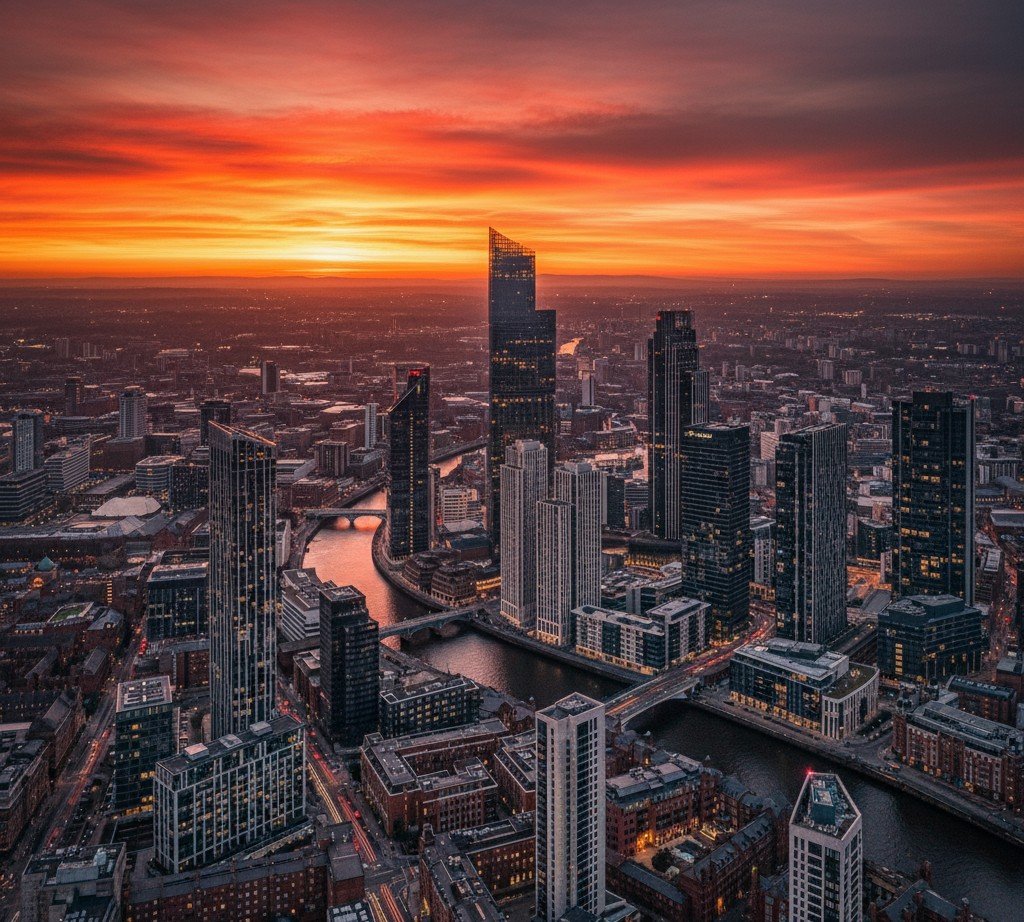
The Manchester skyline has undergone a dramatic transformation over the past two decades — from the smokestacks of the Industrial Revolution to the shimmering glass towers that define the city today. Once known as the beating heart of Britain’s textile industry, Manchester is now equally recognised for its architectural innovation and urban reinvention.
With cranes punctuating the horizon and luxury towers rising at an unprecedented pace, the skyline tells a story of ambition, resilience, and modern identity. As the city prepares for 2025 and beyond, the skyline stands as a bold declaration of Manchester’s global aspirations.
From Industrial Smoke to Skyscrapers: The City’s Evolution
Manchester’s skyline journey mirrors its transformation from a gritty industrial hub to a vibrant European metropolis. In the early 20th century, mills, warehouses, and chimneys dominated the cityscape a symbol of Britain’s industrial power.
After the post-war period and economic decline, Manchester faced decades of stagnation. But the 1996 IRA bombing, which devastated the city centre, became a turning point. Out of destruction came reinvention. The regeneration that followed led to a new wave of urban design, led by architects eager to reshape Manchester’s silhouette.
By the early 2000s, the city embraced vertical living and architectural experimentation. The result? A skyline that rivals any in the UK outside London.
The Icons of the Manchester Skyline
Beetham Tower: The Trailblazer
Completed in 2006, Beetham Tower was Manchester’s first true skyscraper and for years, its most recognisable symbol. Designed by Ian Simpson, the 47-storey glass tower reaches 168 metres high and forever changed the city’s perception of height.
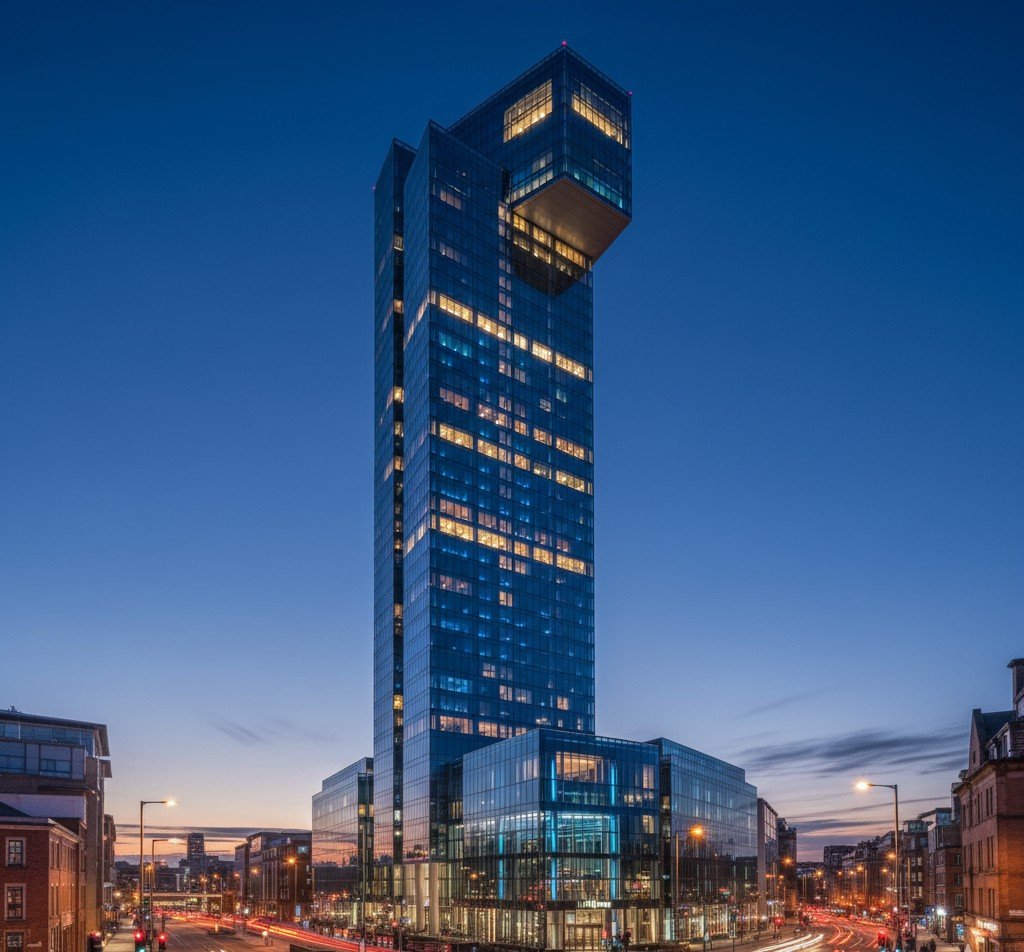
Its unique glass façade and cantilevered upper section made it a conversation piece — some loved it, others loathed it but no one could ignore it. It set the tone for the city’s new skyline ambitions.
Deansgate Square: The Modern Powerhouse
Fast forward to today, and Deansgate Square dominates the Manchester skyline. Completed in 2020, its South Tower soars to 201 metres, making it the tallest residential building in the UK outside London.
This collection of four sleek glass towers, developed by Renaker, represents the future of urban luxury blending modern architecture, sustainability, and city-centre living. At night, the towers light up the skyline like a futuristic constellation.
Lighthouse Tower and Beyond: What’s Next for 2025
The next evolution of the skyline is already in motion. The proposed Lighthouse Tower, set to reach over 220 metres, is poised to redefine Manchester’s horizon yet again.
Meanwhile, the Victoria North, Mayfield Regeneration, and Great Jackson Street projects continue to add architectural variety, mixing offices, green spaces, and residential skyscrapers.
By 2025, experts predict that the Manchester skyline will rival that of major European cities like Rotterdam and Frankfurt in both height and design.
Read More: Manchester Food Guide 2025
The Skyline at Night: Manchester’s Glittering View
When the sun sets, the Manchester skyline at night becomes a breathtaking sight. From the glowing reflections of Deansgate Square to the red lights of construction cranes, the city exudes an almost cinematic energy.
Photographers flock to vantage points like:
- Hulme Park – perfect for panoramic sunset shots.
- Cloud 23 Bar at Beetham Tower – offering skyline views with cocktails.
- Kersal Moor – a historic viewing point overlooking the modern skyline.
The skyline’s night-time beauty also symbolises Manchester’s revival a city that once shut down after dusk now buzzes with life, lights, and opportunity.
Urban Regeneration and Architecture Trends
Manchester’s rapid skyline expansion is not just about aesthetics it’s a reflection of economic growth and sustainable urban planning.
Developers such as Renaker, Allied London, and Far East Consortium are leading projects that combine height with green design. From solar panels to eco-friendly materials, the city’s architecture strives to strike a balance between ambition and responsibility.
Areas such as Ancoats, the Northern Quarter, and Castlefield blend heritage with innovation, preserving industrial architecture while introducing cutting-edge design.
Urban planners are also focusing on connectivity integrating public transport, pedestrian zones, and cultural spaces into skyline developments.
How the Manchester Skyline Reflects the City’s Future
The Manchester skyline has become a symbol of identity representing not just buildings, but a new era of ambition.
Each tower rising from the ground tells a story of a city reinventing itself. From student-friendly apartments to corporate headquarters, the skyline reflects a diverse and progressive landscape.
By 2030, Manchester’s urban core will host dozens of towers above 100 metres, reshaping the skyline into one of Europe’s most exciting urban landscapes.
And yet, amid the glass and steel, the city retains its soul a blend of old charm and modern energy that defines Manchester’s global appeal.
Read More: Best Chinese Restaurants in Manchester: A Local Food Culture Report
Best Spots to View and Photograph the Manchester Skyline
If you’re chasing the perfect skyline shot, here are the must-visit viewpoints:
- Whitworth Locke Rooftop – Trendy terrace with a stunning view of Oxford Road.
- Castlefield Basin – Iconic canal reflections of Deansgate towers.
- Heaton Park Hill – Panoramic skyline framed by greenery.
- First Street – Ideal for urban, ground-level skyline compositions.
For drone photographers, sunrise over the Irwell River captures Manchester’s most photogenic skyline moment a blend of mist, light, and industrial beauty.
Conclusion
The Manchester skyline is more than just a view, it’s a living symbol of transformation, resilience, and ambition. It tells the story of a city that rebuilt, reinvented, and soared to new heights.
From the industrial revolution to the glass towers of today, Manchester continues to stand tall — both literally and figuratively.
FAQs About the Manchester Skyline
1. What is the tallest building in Manchester?
Deansgate Square’s South Tower (201m) currently holds the record.
2. How many skyscrapers does Manchester have?
As of 2025, over 30 buildings exceed 100 metres, with dozens more under construction.
3. What’s the most famous building in Manchester’s skyline?
Beetham Tower remains the city’s most iconic architectural landmark.
4. Where can I get the best view of the Manchester skyline?
Cloud 23 Bar, Hulme Park, and Castlefield Basin are top viewing spots.
5. What new towers are planned for 2025?
Projects like Lighthouse Tower and Trinity Islands are expected to redefine the skyline.
6. Why is Manchester’s skyline growing so fast?
Economic growth, urban regeneration, and a rising demand for city-centre living drive development.
7. How does Manchester’s skyline compare to London’s?
While smaller, Manchester’s skyline is denser and evolving faster than any UK city outside London.
Read More: manchester finest restaurants: 10 Unmissable Dining Gems