

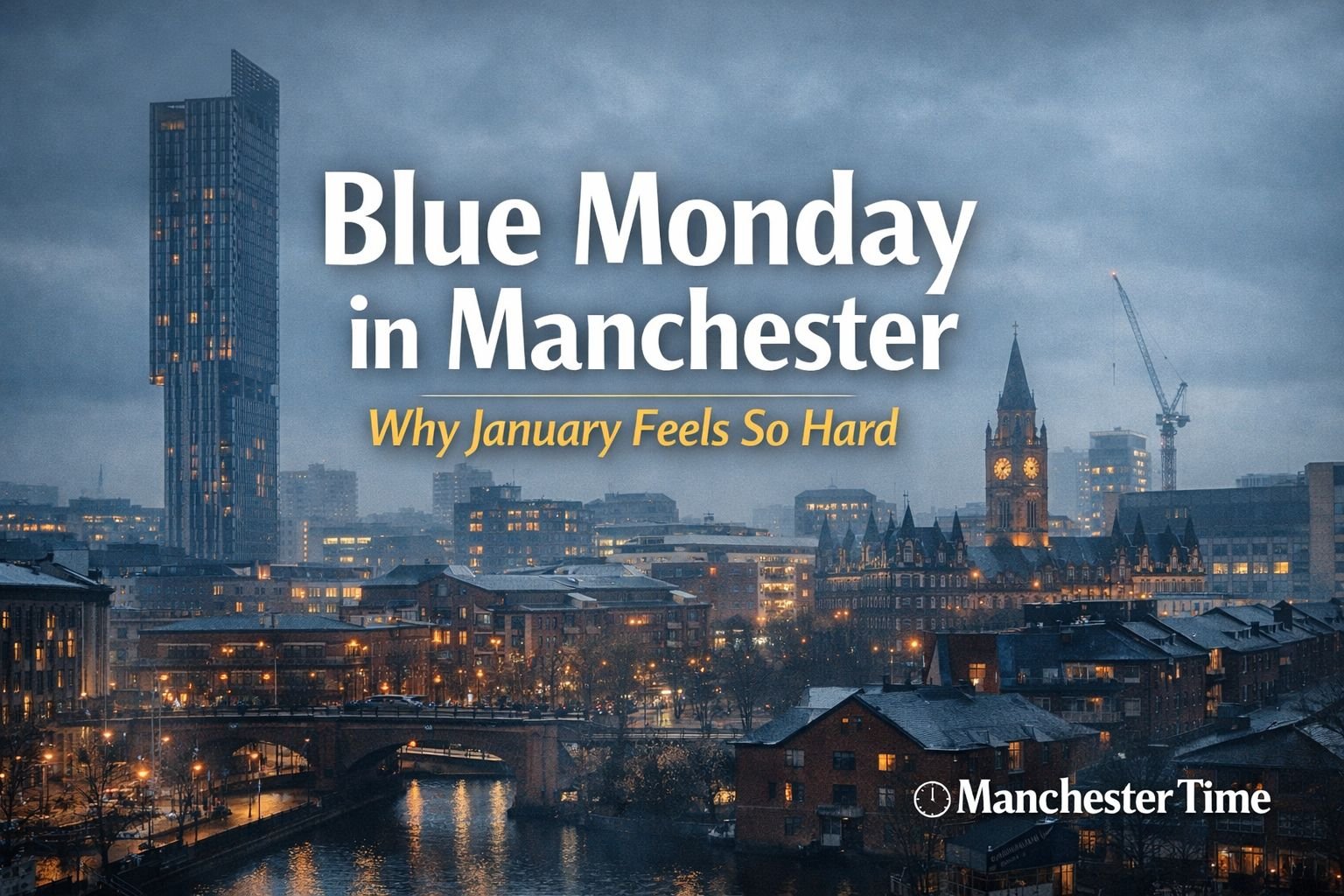
For many people across Manchester, mid-January arrives with a familiar weight. The festive glow has faded, daylight is still scarce, and the reality of work, bills and winter weather sets in. It’s why Blue Monday continues to resonate so strongly with people across the city.
Often described as the most depressing day of the year, Blue Monday usually falls on the third Monday in January. While the science behind the label is disputed, the feelings many Mancunians associate with it, such as low energy, stress and emotional fatigue, are very real.
What Is Blue Monday and Why January Hits Hard in the UK
The idea of Blue Monday emerged in the mid-2000s and quickly embedded itself in British culture. It claimed to pinpoint the gloomiest day of the year by combining factors such as weather, debt, motivation and post-Christmas routines.
For UK households, particularly in northern cities like Manchester, January already brings together several pressures. Dark mornings, early sunsets, colder temperatures and the return to full work schedules collide with post-Christmas financial strain.
This combination helps explain why searches for “January blues”, “Blue Monday UK” and winter mental health spike every year, regardless of whether the date itself holds scientific weight.
Is Blue Monday Real? What Experts Actually Say
Mental health professionals are clear that Blue Monday is not a medically recognised condition. The original formula used to calculate the date has been widely criticised as pseudoscience, and even its creator later distanced himself from the idea.
However, experts also stress that dismissing Blue Monday entirely risks overlooking genuine seasonal mental health challenges. Guidance from organisations such as the NHS consistently acknowledges that people often feel lower in mood during the darker winter months.
The key distinction is simple. Depression and anxiety do not arrive on a single Monday, but winter can make existing pressures feel heavier.
How Blue Monday Affects Manchester Workers and Families
In Manchester, January can feel particularly relentless. Many commuters leave home in darkness and return the same way. Office workers in the city centre face intense workloads after a short festive break, while hospitality and retail staff often see hours reduce after Christmas.
Cost-of-living pressures add another layer. Energy bills peak during the coldest weeks, and household budgets feel tighter just as motivation dips. For families across Greater Manchester, that financial stress often sits alongside emotional fatigue.
It’s why Blue Monday continues to feel relevant locally, even if the label itself is flawed.
Blue Monday, January Blues and Seasonal Mental Health
Mental health specialists encourage people to look beyond a single date and focus on broader seasonal patterns. Seasonal affective disorder UK guidance highlights reduced daylight as a key contributor to winter low mood, but many people experience milder symptoms without a formal diagnosis.
Low energy, disrupted sleep and difficulty concentrating are all common during January. In a dense urban environment like Manchester, where daylight can be limited during working hours, those effects may feel amplified.
Recognising these patterns early matters more than worrying about whether today happens to be Blue Monday.
Practical Ways to Get Through Blue Monday in Manchester
There is no instant fix for January blues, but small, realistic steps can help:
- Get daylight where you can. A short lunchtime walk can improve mood and sleep
- Lower the pressure. January does not need dramatic resolutions. Consistency matters more
- Stay connected. Even brief social plans can reduce feelings of isolation
- Move gently. Light exercise supports mental wellbeing without adding pressure
- Be mindful of finances. Planning, rather than avoiding money worries, eases anxiety
These approaches are backed by UK mental health guidance and fit the realities of busy Manchester lives.
Where Manchester Residents Can Find Support
If low mood or anxiety lingers beyond January, help is available locally. Manchester residents can access mental health advice through GP services, NHS talking therapies and community-based support organisations across the city.
Professionals consistently emphasise that seeking support early is a strength, not a failure, and that winter struggles are far more common than many people realise.
The Bottom Line on Blue Monday
Blue Monday may not be scientifically real, but the challenges it highlights certainly are. January can be tough in Manchester, and acknowledging that reality is far healthier than dismissing it.
Rather than focusing on one date, steady self-care, realistic expectations and accessible local support offer a more meaningful way through the winter months. As daylight slowly returns, it’s worth remembering that how January feels does not define the year ahead.
Read More: Michael McIntyre Reclaims Saturday Nights as Big Show Wins Viewers and US Tour Launches