


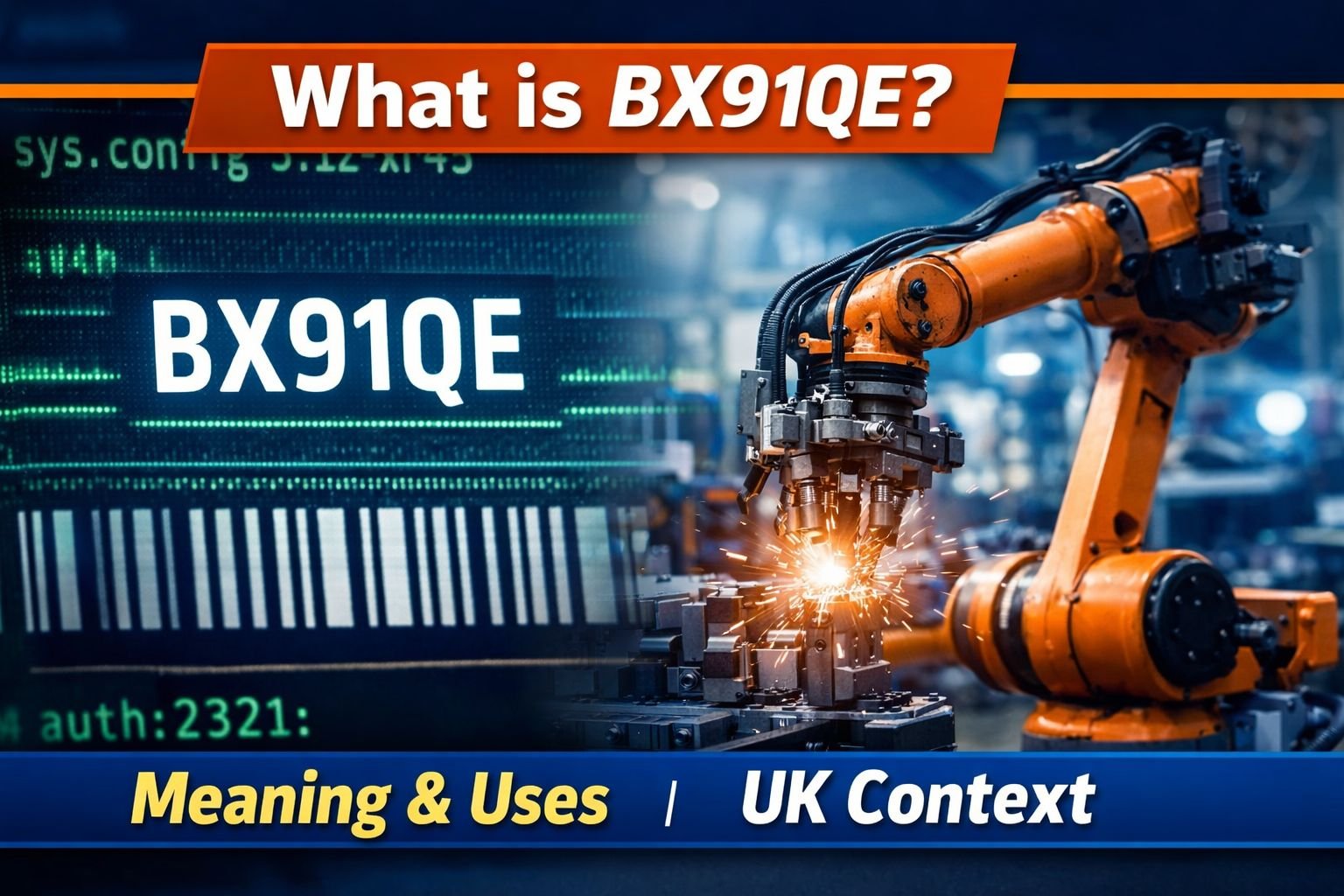
The term bx91qe has started appearing in search results, technical discussions and online portals, prompting a simple question from many UK users what exactly is bx91qe?
It does not resemble a product name, a recognised UK postcode or a government scheme. Yet bx91qe continues to generate curiosity. This guide takes a measured look at what bx91qe appears to represent, why such codes surface publicly, and how similar identifiers function inside modern digital and industrial systems.
What Is bx91qe?
Based on its structure and usage patterns, bx91qe appears to function as a structured alphanumeric identifier. It is not currently recognised as a public-facing product or official UK standard. Instead, it aligns with the type of machine-readable reference codes commonly used within:
- Data systems
- Industrial software platforms
- Asset tracking environments
- Configuration management tools
- Internal documentation frameworks
In short, bx91qe looks less like a consumer brand and more like a system-level reference.
These identifiers are typically designed to be short, portable and easy for software to process consistently across platforms.
Why Do Codes Like bx91qe Matter?
While bx91qe itself may simply be a surfaced identifier, codes of this format play an important role in modern UK organisations.
Across manufacturing, logistics, utilities and digital services, structured identifiers help organisations:
- Track components and batches
- Link events to configurations
- Maintain audit trails
- Connect legacy systems with modern analytics
- Reduce manual reconciliation errors
In practical terms, a code like bx91qe could represent a configuration profile, an asset grouping, a transaction class or an internal reference. The value lies not in the letters themselves, but in the consistency they enable.
Why Structured Codes Are Increasing
Across Greater Manchester and the wider UK, organisations are investing heavily in digitisation. From Trafford Park manufacturers modernising production lines to regional infrastructure operators improving data visibility, structured identifiers underpin much of this transition.
When older equipment is connected to new cloud platforms, naming inconsistencies often become a major obstacle. Introducing consistent code formats similar in structure to bx91qe helps bridge that gap without requiring full system replacement.
In practical environments, these identifiers may appear in:
- Production batch logs
- Maintenance tickets
- API parameters
- Asset registers
- Security monitoring dashboards
That broader trend helps explain why terms like bx91qe may surface in online searches. As systems become more interconnected, backend references are more likely to become visible.
Is bx91qe a Postcode, Product or Security Risk?
It is important to address the most common assumptions clearly.
It is not a standard UK postcode. The format does not match recognised postcode structures.
It is not currently linked to a known retail product. There is no verified listing tying bx91qe to consumer goods or devices.
There is no evidence it represents a malware signature or security alert. At the time of writing, bx91qe does not appear in recognised cybersecurity threat lists.
Read More: Designmode24 interior design: does this online studio really understand UK homes?
How Identifiers Like bx91qe Are Used in Industry
Understanding bx91qe becomes easier when you look at how similar identifiers function in real settings.
Manufacturing and Production
In advanced manufacturing environments, structured codes are often used to:
- Tie specific machine configurations to output batches
- Trace raw materials through processing stages
- Link quality inspection results to exact production conditions
If a defect is discovered, a structured identifier allows engineers to follow the digital trail quickly and accurately.
Operational Technology and Infrastructure
In infrastructure and utilities environments, codes similar to this may:
- Identify firmware versions
- Mark asset groups with shared risk profiles
- Anchor maintenance histories
This becomes particularly important in regulated sectors where audit clarity is essential.
Data and Analytics Systems
Within analytics platforms, compact identifiers provide:
- Clean joins between datasets
- Stable keys for reporting dashboards
- Reliable references for AI training models
Without consistent identifiers, systems struggle to reconcile historical data reliably.
Why bx91qe Is Generating Curiosity
Search behaviour around bx 91 qe appears driven by three motivations:
- Definition: What does bx91qe mean?
- Legitimacy: Is bx91qe safe?
- Context: Why am I seeing bx91qe?
When backend references become visible in URLs, documentation or shared screenshots, users naturally want clarity.
In many cases, search spikes around a term like this reflect visibility rather than wider significance. That does not make it meaningless, but it does suggest the explanation is usually technical rather than dramatic.
Balanced Evaluation
It is important not to overstate what bx91qe represents.
There is no public evidence that bx91qe is a nationally recognised UK framework or formalised standard. However, its structure closely resembles identifiers widely used across digital and industrial environments.
Used thoughtfully, structured codes improve traceability, automation and compliance. Used poorly, they become confusing database fields that no one maintains properly.
The principle behind this is straightforward: clarity through consistency.
Practical Takeaway
If you have encountered This:
- Treat it as a system-level identifier unless credible evidence suggests otherwise.
- Do not assume it represents a product, postcode or threat.
- If seen within a workplace context, consult internal documentation or your IT team for precise meaning.
In most cases, the simplest explanation is the correct one. This is likely a structured digital reference that has become visible beyond its original technical context.
Conclusion
Bx91qe is best understood as an alphanumeric identifier that has surfaced in public view. While it may appear mysterious at first glance, its format aligns closely with structured coding systems widely used across UK industry, infrastructure and digital platforms.
Rather than a hidden programme or emerging product, The most plausibly reflects the quiet mechanics of modern data environments. These systems rely on compact, consistent references to keep increasingly complex operations running smoothly.
For Manchester-based organisations and UK businesses more broadly, the broader lesson is clear. Structured identifiers matter. Whether labelled bx 91 qe or something else entirely, they form part of the backbone that supports traceability, automation and compliance in today’s connected economy.
Read More: Innovation News DualMedia: UK Model Explained
