


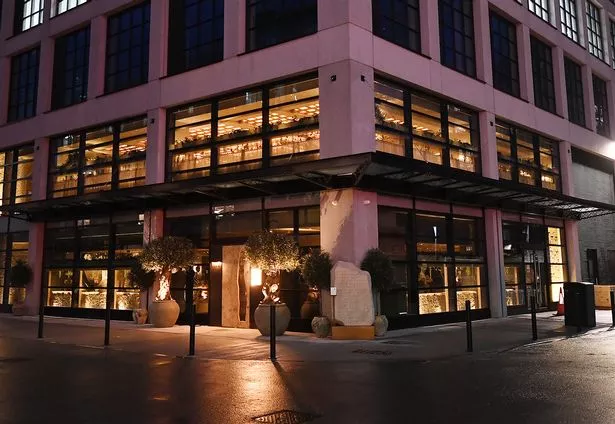
Manchester has never been short of restaurants promising an “experience”. Most fade quickly. Fenix Manchester, which opened at St John’s in late 2023, has not. A year on, it remains one of the city’s most talked-about dining rooms praised, criticised, photographed relentlessly, and rarely ignored.
On a Friday evening, the picture is familiar. A queue along Goods Yard Street. Groups dressed for the occasion. Phones out before coats come off. This is dining as destination, a restaurant people plan around rather than stumble into.
Whether that’s a strength or a weakness depends on what you expect from a night out.
From Tattu to St John’s
Fenix Manchester comes from Permanently Unique, the group behind Tattu — the restaurant that, for better or worse, rewrote Manchester’s relationship with theatrical dining when it opened in Spinningfields in 2015. Brothers Adam and Drew Jones have built a business on spectacle backed by capable kitchens, and the formula has travelled well across the UK.
Here, the brief is modern Greek Mediterranean cooking wrapped in design heavy enough to stop traffic. It sits on the edge of St John’s, the long gestating regeneration of the former Granada Studios site, where Manchester’s cultural ambition still slightly outpaces reality.
Inside the Space
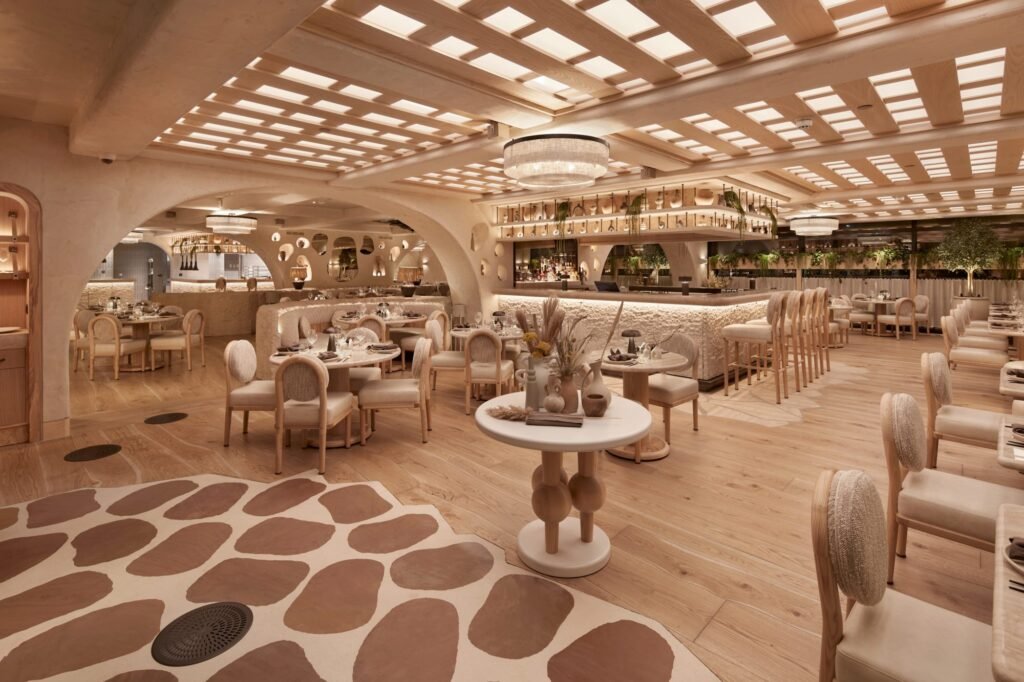
The design is impossible to miss. Downstairs, The Nest bar is all textured stone, candlelight and cave-like drama. Upstairs, a sweeping staircase wrapped around a towering olive tree — opens into a dining room that shifts from daylight Mediterranean tones to nightclub lighting as the evening wears on.

The room is expertly staged. Travertine tables, curved banquettes, bronze chandeliers. It photographs beautifully, which explains much of its popularity. What divides opinion is comfort. Some diners relish the immersion. Others find it overwhelming, more set than restaurant.
By late evening, the atmosphere shifts again as the Moonlight Club concept takes over, blurring the line between dinner service and nightlife. For some, that’s the appeal. For others, it’s the point where focus slips.
The Kitchen and the Food
The strongest argument for Fenix Manchester is the cooking. Executive head chef Ippokratis Anagnostelis and head chef Zisis Giannouras bring serious Greek pedigree, with backgrounds in Michelin-starred kitchens and Mykonos fine dining.
This is not taverna food, and it doesn’t pretend to be. The menu is built for sharing, with meze sitting alongside robata-grilled meats and seafood. When the kitchen leans into Greek fundamentals tzatziki, taramasalata, grilled fish, orzo it excels.
The langoustine orzo, rich and carefully cooked, has become the dish most likely to convert sceptics. Grilled octopus arrives tender, halloumi is treated with restraint rather than gimmickry, and the pita is consistently praised by diners who know the cuisine well.
There are moments where the global influences stretch credibility. Chicken anticucho, ceviche, and Italian-leaning pasta dishes sit uneasily on a Greek menu. They’re well executed, but they underline a broader tension: authenticity versus the eclecticism that drives social media interest.
Read More: Knoops in Manchester: Why a Premium Hot Chocolate Café Is Succeeding on Cross Street
Drinks and Service
Cocktails are theatrically presented and divided into elemental themes inspired by Greek mythology. They’re visually impressive, though not always memorable in flavour. Several reviewers have noted that the drinks feel more aligned with pre-pandemic trends than current cocktail innovation.
Service can be excellent knowledgeable, warm, confident but consistency is an issue. At this price point, rushed courses or distracted front of house staff stand out more sharply than they would elsewhere.
Who Goes and Why
The crowd skews young, celebratory and dressed for the camera. Birthdays, anniversaries and group bookings dominate. This is not accidental. Fenix Manchester is built for moments, for nights that feel like events.
That shapes the atmosphere. Some diners describe it as exhilarating. Others liken it to being inside a film set immersive but slightly impersonal. A Greek food writer who had lived on Kefalonia praised the cooking but said the environment felt more about being seen than being welcomed.
St John’s and the Bigger Picture
Fenix Manchester also reflects its surroundings. St John’s remains a work in progress ambitious, culturally minded, but still fragmented. Factory International has given the area gravity, but footfall remains uneven and the sense of place is still forming.
In that context, Fenix feels slightly ahead of its neighbourhood a restaurant designed for a fully realised cultural quarter rather than one still finding its feet. It works best when paired with an evening already planned in the city centre.
The Verdict
Fenix Manchester succeeds on its own terms. It delivers spectacle, competent modern Greek cooking, and a sense of occasion that many diners actively want. When the kitchen is allowed to lead, it’s genuinely impressive.
Where it falters is balance. The production sometimes overwhelms the fundamentals comfort, intimacy, consistency. For diners seeking a quiet, food led experience, it may frustrate. For those who want dinner to feel like a night out, it does exactly what it promises.
Manchester is a city that enjoys ambition but has little patience for empty gloss. Fenix Manchester walks that line carefully. Some nights it clears it comfortably. Others, less so. Either way, it remains one of the city’s most discussed restaurants and that, in itself, says something.
Read More: Peter Duffy Sausage Rolls: Why the Search Term Has Confused UK Food Lovers
