


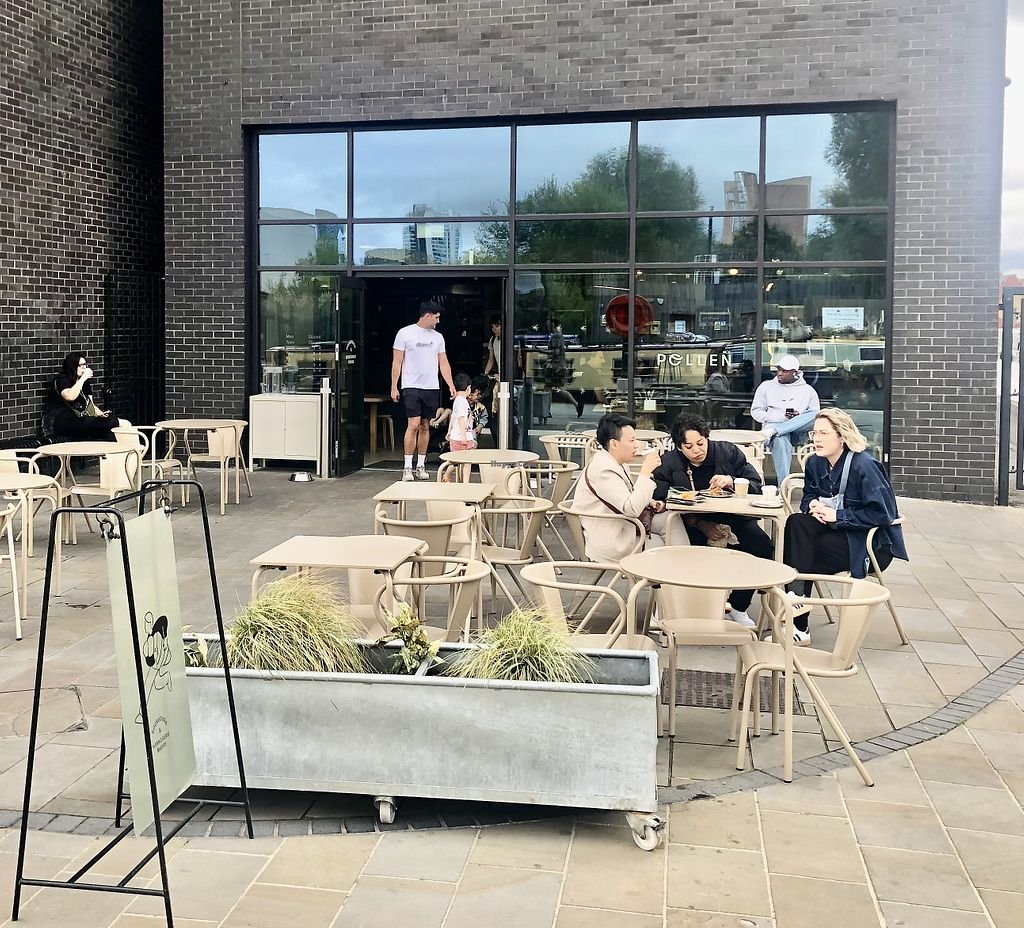
Saturday mornings at Pollen Bakery Manchester reveal why this sourdough specialist has become woven into the city’s food culture. Before the doors open at Cotton Field Wharf in Ancoats, queues stretch quietly along the marina side pavement. By early afternoon, entire batches have often sold out. What’s happening here is not the churn of a chain café but something closer to routine: locals arriving with tote bags, greeting staff by name, debating which loaves survived the morning rush.
What began in 2016 beneath a Piccadilly railway arch has grown into a benchmark for Manchester’s independent food movement. Founded by Hannah Calvert and Chris Kelly, the bakery now operates two sites the Ancoats flagship and a second location at Kampus supplying restaurants across the city while remaining firmly rooted in neighbourhood life.
The Craft Behind the Crust
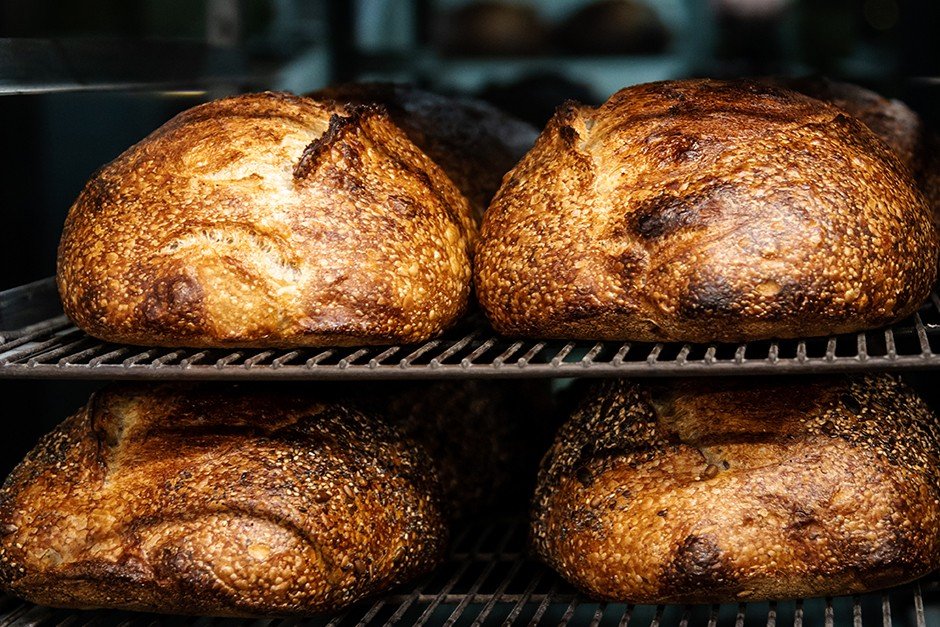
The bakery’s reputation rests on one non-negotiable principle: time. While supermarket loaves are engineered for speed, Pollen Bakery Manchester signature sourdough ferments for more than a day. Organic British wheat, stone ground by traditional Yorkshire millers and sourced from Cotswold producer Matthew’s, is combined with a natural starter powered by wild yeast.
After an initial warm proof, the dough is shaped and rested under refrigeration for around 18 hours before baking. The result is a loaf with a deep, burnished crust and an open crumb that stays fresh for days bread designed to be eaten slowly rather than rushed.
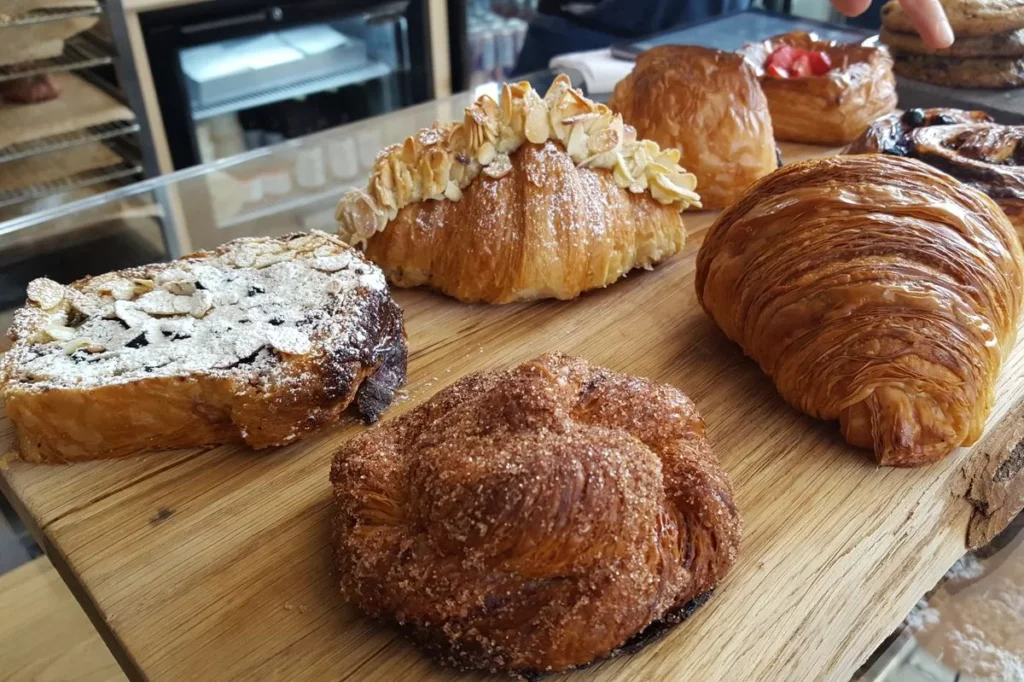
That same patience carries through to the viennoiserie. Croissants are built using classical lamination butter folded repeatedly into yeasted dough to create dozens of fine layers. They shatter audibly at first bite, rich but never greasy. Reviews often praise their balance — indulgent without tipping into excess.
Innovation tends to grow from necessity rather than novelty. The now-famous Croissant Butter began as a way to repurpose unsold pastries; caramelised croissants blended with toasted white chocolate quickly became one of the bakery’s most sought-after products. Elsewhere, bespoke loaves developed for partners including a malted rye hydrated with bitter from local brewers Runaway reflect a willingness to experiment within traditional frameworks.
Two Sites, One Philosophy
The Ancoats bakery retains an industrial simplicity that suits its surroundings. Exposed brick, communal wooden tables and views across New Islington Marina frame a space that feels functional rather than curated. The open kitchen allows customers to watch dough being shaped at a central table a quiet reminder that this is still a working bakery.
When the second site opened at Kampus in 2022, it addressed a practical challenge as much as an ambition. The Ancoats space could no longer comfortably house a growing pastry team alongside bread production. Kampus introduced a larger kitchen and a glass gallery overlooking the lamination process, turning normally hidden labour into a live demonstration.
Despite the expanded footprint, both locations operate on a walk-in-only basis. It’s a deliberate choice that preserves the spontaneity of neighbourhood bakeries, even if it means navigating busy weekends. Dogs curl up beneath tables, laptops appear during weekday mornings, and conversations drift easily between bread preferences and local news.
Why Locals Keep Coming Back
Consistency is the bakery’s quiet advantage. Regulars return for the same reasons week after week: the 28-hour sourdough anchoring household routines, croissants worth queuing for, pastries that feel considered rather than showy. One customer summed it up succinctly: “The bread is the best I’ve found in Manchester completely different to supermarket loaves.”
That reliability has allowed the business to occupy a rare middle ground. It supplies some of the city’s most respected kitchens including early wholesale partner Adam Reid at The French, as well as aether at Manchester Airport while remaining accessible enough to function as a daily stop for local residents. Independent cafés such as Takk, Idle Hands and Cafe Beermoth also rely on its bread.
Sourcing reinforces those local ties. Alongside British flour, the bakery works with Blossom Coffee, The Estate Dairy, Cinderwood Market Garden, Littlewoods Butchers and Out of the Blue Fish. For customers who care about provenance, those relationships signal a business embedded in regional supply chains rather than abstracted from them.
A Fixture in Manchester’s Food Landscape
Ancoats’ transformation over the past decade has been dramatic. Once defined by derelict mills, it is now one of the city’s most concentrated dining districts. Pollen Bakery Manchester arrived early enough to help shape that momentum, opening its original railway-arch bakery when the area was still transitional and relocating to the marina as footfall followed.
Kampus represents a different model: a purpose built neighbourhood designed around independents from the outset. Developed by Capital&Centric and HBD, it avoided chain tenants in favour of operators such as Nell’s Pizza, Cloudwater and Beeswing Wine Bar. Anchoring the food offer here signalled confidence in both the scheme and the bakery’s ability to adapt without losing identity.
Industry recognition has followed steadily. Recent accolades include Independent Food Producer of the Year at the Manchester Food and Drink Festival Awards and a top-five ranking in Britain’s Best Artisan Bakeries 2025. National titles have echoed that praise, but the validation that matters most remains local.
Read More: Fenix Manchester: The Greek Restaurant Dividing Opinion in the City Centre
A Measured Closing
Pollen Bakery Manchester has grown by focusing on fundamentals: extended fermentation, quality ingredients and consistent execution. Its expansion responded to genuine operational pressure rather than a desire to scale quickly, preserving the walk-in accessibility that defines the experience.
Whether it is the city’s best bakery is ultimately subjective. What is harder to dispute is its role within Manchester’s food network serious about craft, embedded in daily routines, and capable of supplying both home kitchens and restaurant tables without compromise. In a city still shaping its post-industrial food identity, that balance feels quietly significant.
FAQs
1. Why is Pollen Bakery Manchester so popular?
The Pollen Bakery Manchester has built a reputation for slow-fermented sourdough, consistent quality, and a focus on fundamentals rather than trends. Its bread and pastries are produced in limited batches, which often sell out, reinforcing demand driven by routine local customers rather than short-term hype.
2. When did Pollen Bakery open in Manchester?
Pollen Bakery Manchester first opened in 2016 beneath a railway arch near Piccadilly before relocating to its current Ancoats site beside New Islington Marina in 2018. A second location at Kampus followed in 2022.
3. What makes Pollen’s sourdough different from supermarket bread?
The bread is naturally leavened using wild yeast and undergoes extended fermentation of more than 24 hours. This slower process develops flavour, improves texture, and allows loaves to remain fresh longer than industrial bread made using accelerated methods.
4. Does Pollen Bakery Manchester have more than one location?
Yes. The business operates two walk in sites the original bakery and café in Ancoats and a larger pastry focused café at Kampus, close to Piccadilly Station.
5. Why do queues form at Pollen Bakery on weekends?
Demand regularly exceeds supply, particularly for sourdough loaves and croissants baked in limited daily quantities. Many customers visit as part of a weekend routine, contributing to predictable peak-time queues.
6. What are Pollen Bakery’s best-known products?
The 28-hour sourdough is the bakery’s flagship loaf. Croissants, seasonal pastries, and the Croissant Butter developed to reduce waste are also among its most sought-after items.
7. Does Pollen supply restaurants as well as retail customers?
Alongside its cafés, the bakery supplies bread and pastries to a range of Manchester restaurants and independent cafés, balancing wholesale production with neighbourhood retail service.
8. Is Pollen Bakery suitable for casual visits or only brunch?
Both. Customers visit for takeaway bread and pastries as well as sit-down brunch, particularly at the Ancoats marina site and the larger Kampus café.
9. Has Pollen Bakery received any awards or recognition?
The bakery has received multiple industry awards and has been featured in national food guides, reflecting its influence within Manchester’s independent food scene.
10. Is Pollen Bakery Manchester still independently owned?
Yes. Despite its growth, the bakery remains independently run, with expansion driven by production needs rather than franchising or large-scale commercial rollout.
Read More: Knoops in Manchester: Why a Premium Hot Chocolate Café Is Succeeding on Cross Street
