


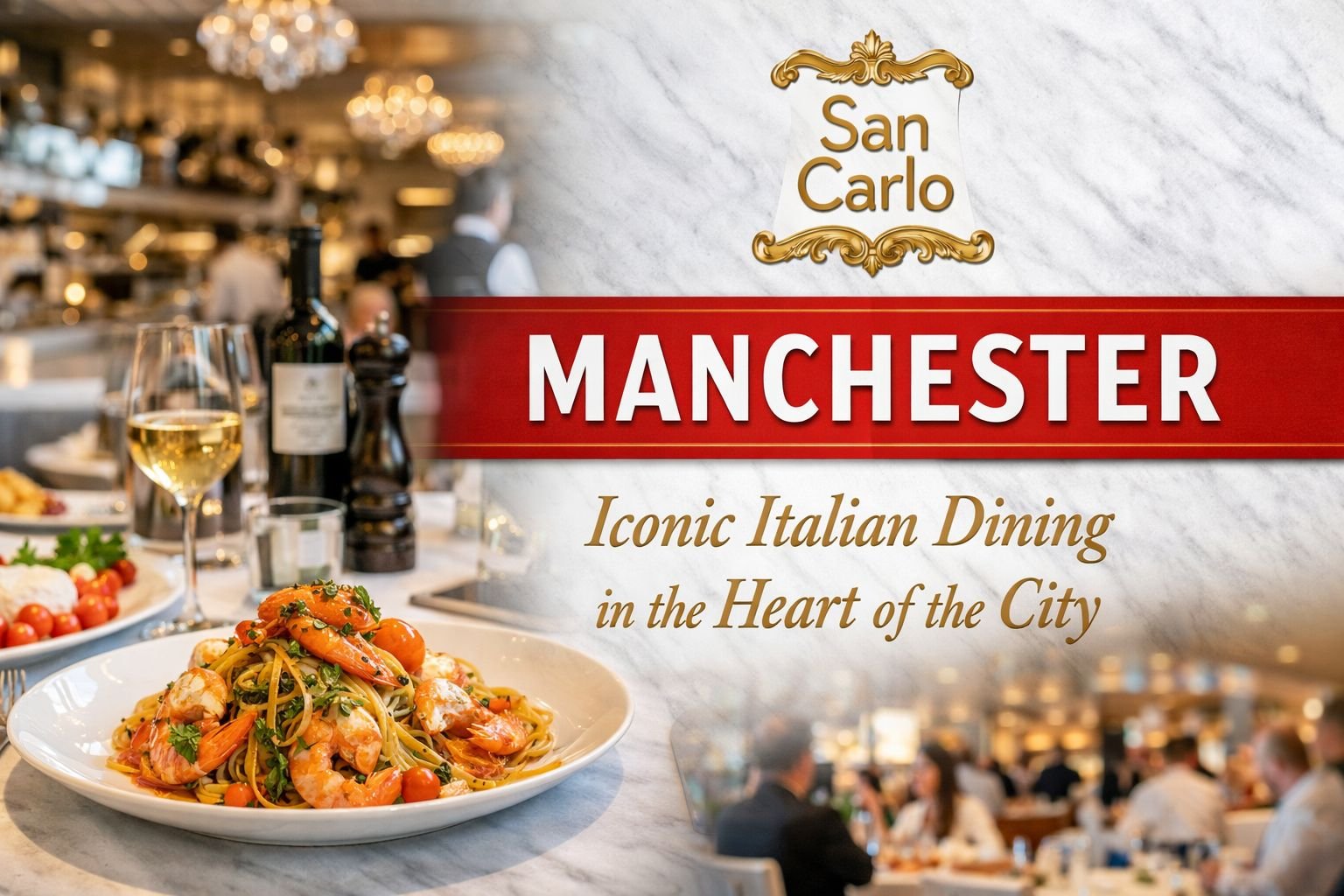
San Carlo Manchester opened in December 2004, occupying a large site on King Street West that seats more than 200 diners beneath crisp white tablecloths. Nearly two decades on, the restaurant stands as one of the city’s most recognisable dining institutions — a fixture in a Manchester food scene that has changed dramatically around it.
While trend-driven venues have risen and fallen, san carlo manchester has held its ground through a combination of traditional Italian cooking, strategic positioning, and a level of celebrity pull few local restaurants can rival.
What Is San Carlo Manchester Known For
San carlo manchester built its reputation on a clear proposition: classic Italian food served in a high-energy, upmarket setting. The menu focuses on established regional dishes rather than reinvention. Tortellini panna e prosciutto, for example, has remained unchanged since the group’s first Birmingham opening in 1992.
The kitchen sources ingredients directly from Italy, including bottarga from Sardinia, burrata from Naples, and culatello from Parma. This commitment to authenticity extends to the front of house. Italian waiters dominate the dining room, creating an atmosphere designed to feel rooted in tradition rather than corporate branding.
The room itself generates strong reactions. Regular diners describe it as busy even early in the week, with a sense of momentum that can resemble a Saturday night regardless of the day. The all-white interior, red accents, marble bar, and open kitchen contribute to a theatrical feel that is unapologetically polished and deliberately visible.
Celebrity Factor and Public Identity
Celebrity custom plays a central role in shaping how san carlo manchester is perceived. Footballers from Manchester’s clubs appear regularly, alongside music and television figures. High-profile visits — including international pop stars — have helped cement its image as a place to see and be seen.
That visibility attracts a specific audience: business diners closing deals, families marking milestones, and visitors hoping to glimpse Premier League names. The effect is self-reinforcing, drawing attention while also setting expectations about atmosphere and service style.
Location, Crowd, and Manchester Appeal
San carlo manchester sits just off Deansgate on King Street West, within easy reach of Spinningfields. That location proved decisive. When the restaurant opened, the area was emerging as Manchester’s financial quarter, and it quickly became a default choice for corporate lunches and post-meeting dinners.
Even today, lunchtime service remains busy with professionals. Evenings bring a broader mix — couples, celebration groups, and football entourages — united by a dress-forward approach that sets the restaurant apart from more casual city options. Jeans and trainers feel out of place here, by design rather than accident.
Founder Carlo Distefano’s personal connection to the city adds another layer. Arriving from Sicily in 1962 with little money, he built his first business in Manchester before entering hospitality. His son Marcello, now managing director, has consistently described the city as central to the brand’s identity. That local origin distinguishes the venue from national chains that replicate a template without regional roots.
Food Quality and Dining Experience
The kitchen at san carlo manchester focuses on traditional Italian cooking executed with precision rather than experimentation. Fish dishes often receive the most consistent praise, while pasta and seafood dominate recommendations.
Service remains deliberately formal. Staff work quickly and efficiently, reflecting a style closer to classic European dining than to Manchester’s increasingly relaxed hospitality culture. Some diners appreciate the professionalism; others find the pace hurried. That divide reflects a broader theme: qualities that impress one table may frustrate the next.
Portion sizes tend to satisfy, and the open kitchen allows diners to observe preparation. Prices sit at the higher end of Manchester’s Italian market, creating expectations that the restaurant does not always meet evenly across every visit.
Public Reputation and Criticism
Public opinion on san carlo manchester remains sharply divided. Loyal customers cite consistency, ingredient quality, and atmosphere as reasons for repeat visits. Critics focus on service tone, table spacing, and noise levels, which can feel intense during peak hours.
Food criticism tends to centre on inconsistency rather than concept. While many meals meet expectations, occasional missteps attract sharper scrutiny given the pricing. The perception that celebrity tables receive extra attention also surfaces in some feedback, though this is difficult to verify objectively.
What matters from an editorial standpoint is balance. The restaurant generates both praise and frustration precisely because it operates at scale and with strong opinions about how dining should feel.
Why San Carlo Manchester Still Matters
Despite criticism, san carlo manchester continues to matter because of its permanence. The restaurant has served more than two million diners since opening and welcomes around 3,500 guests each week. That volume makes it both an economic presence and a cultural reference point.
Its significance lies in offering consistency at a time when many restaurants chase novelty. While competitors pivot rapidly toward trends, San Carlo maintains a stable menu and recognisable identity. That reliability appeals to diners who value knowing exactly what they will receive.
The Manchester flagship also anchors a broader brand that has expanded nationally and internationally. Yet the King Street location remains central both symbolically and commercially to how the group defines itself.
Conclusion
Approaching its third decade, san carlo manchester remains a polarising but enduring feature of the city’s dining scene. It is not subtle, not casual, and not designed to please everyone. Service can feel brisk, the room can feel crowded, and execution is not flawless.
Yet many diners return for precisely the same reasons others stay away. They value the energy, the familiarity, and the sense that little changes from year to year. In a city where restaurants constantly reinvent themselves, San Carlo offers something rarer: clarity about what it is and who it serves.
FAQs
1. When did San Carlo Manchester open?
San Carlo Manchester opened in December 2004 on King Street West and has remained a fixture in the city’s dining scene for nearly two decades.
2. Where is San Carlo Manchester located?
The restaurant is located on King Street West, close to Deansgate and Spinningfields, placing it near Manchester’s business and commercial district.
3. What type of food does San Carlo Manchester serve?
San Carlo Manchester specialises in traditional Italian cuisine, focusing on classic regional dishes rather than modern or experimental menus.
4. Is San Carlo Manchester considered expensive?
Prices sit at the higher end of Manchester’s Italian restaurant market, reflecting its location, service style, and positioning as an upmarket dining venue.
5. Is San Carlo Manchester popular with celebrities?
Yes. The restaurant is well known for attracting footballers, musicians, and television personalities, which has contributed to its public profile.
6. What is the atmosphere like at San Carlo Manchester?
The atmosphere is energetic and formal, with a busy dining room, open kitchen, and a dress-forward crowd, especially during evenings.
7. Is San Carlo Manchester suitable for business dining?
Yes. Its location and service style have made it a long-standing choice for corporate lunches, meetings, and professional gatherings.
8. How is the service at San Carlo Manchester?
Service is typically efficient and traditional, though opinions vary. Some diners appreciate the professionalism, while others find it fast-paced.
9. Does San Carlo Manchester still matter in today’s food scene?
Despite changing dining trends, San Carlo Manchester remains relevant due to its consistency, scale, and long-standing role in the city’s hospitality landscape.
10. Who owns San Carlo Manchester?
The restaurant was founded by Carlo Distefano, with the business now led by his son, Marcello Distefano, as part of the wider San Carlo Group.
Read More: Thinking of Buying Civiliden LL5540? What UK Consumers Need to Know
