


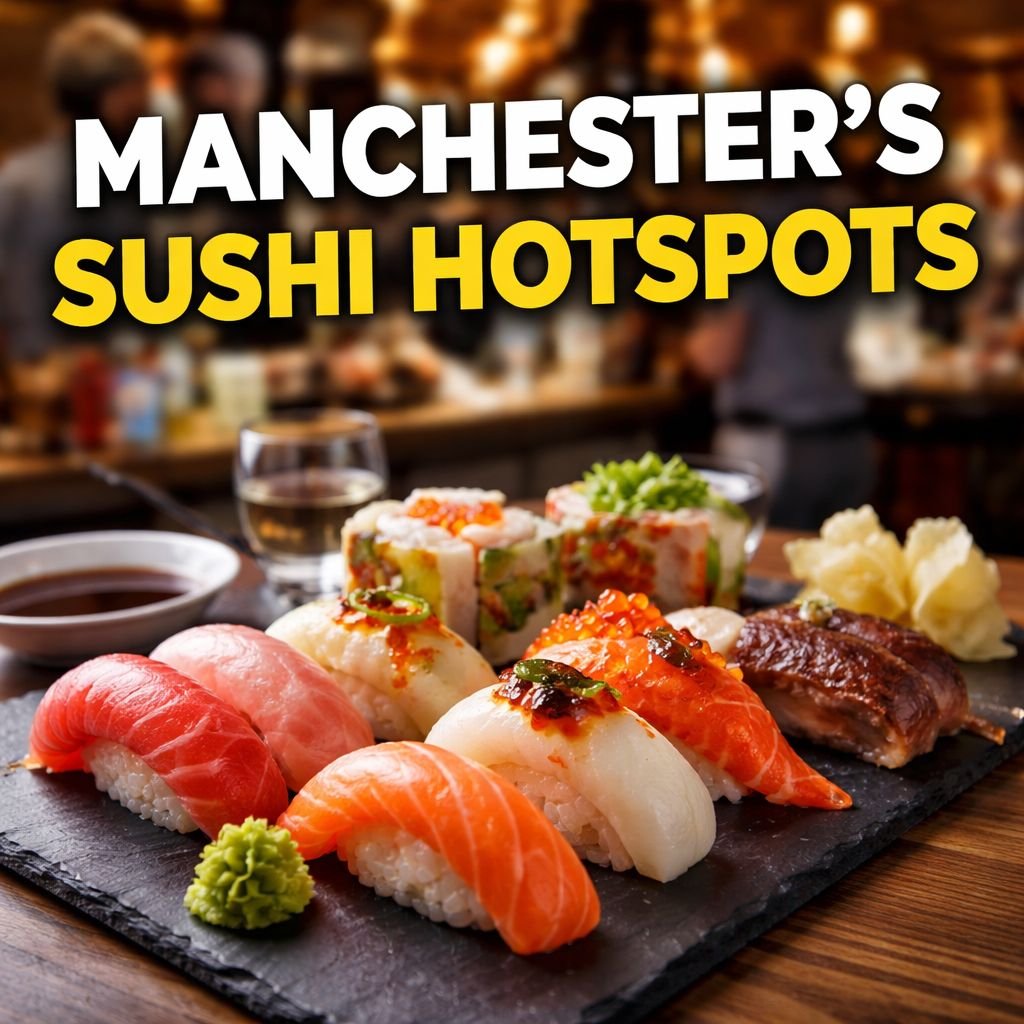
You’d have to be living in Trafford Park to miss the fact that Manchester has quietly built itself into one of the UK’s most credible cities for Japanese dining. The signs are everywhere. Sushi Manchester counters inside Withington family run restaurants. Two Michelin star alumni hand rolling otoro on Oxford Road. Scandi-Japanese chains eyeing Spinningfields for northern expansion. Something shifted in this city and the raw fish supply chain followed.
It wasn’t always like this. Even ten years ago, the conversation around sushi manchester mostly circled the same question: where could you actually get decent fish? Today, the question has changed. It’s about which neighbourhood to head to and whether you want tuna belly served with theatre and dry ice, or quietly plated in a 26-seater room where the owner also washes the dishes.
Why Sushi Found Its Footing Here
Manchester has three things working in its favour.
First, a large student population with an appetite for accessible food beyond the pub rotation. Second, a growing professional crowd in Spinningfields and Deansgate who’ve travelled, understand what good Sushi Manchester should taste like, and aren’t shy about paying for quality. Third and most importantly a food-literate dining culture that doesn’t treat Japanese cuisine as a novelty.
The restaurant landscape reflects that maturity. You’ll find everything from omakase counters serving a handful of diners per week to all you can eat rooms packed with Portland Street office workers. The premium end is thriving places sourcing A5 wagyu and bluefin but so are neighbourhood spots turning out hand-rolled maki and chirashi bowls at prices locals will happily return for.
That balance matters. Sushi here isn’t performative. It’s part of the weekly rotation — something you grab on a Tuesday lunch or plan around for a birthday meal. The variety tracks the demand, and the demand keeps growing.
Where the Quality Actually Lives
Walk into One Sushi on Oxford Road and you’ll immediately understand what fifteen years in a two Michelin star Hong Kong kitchen looks like. Chef Eddie works behind a modest counter, preparing omakase style platters dictated entirely by what arrived that morning. Otoro, A5 wagyu, precisely cut sashimi at around £58 per person, it undercuts London equivalents without cutting corners.
In Chinatown, Yuzu has spent over a decade quietly doing the opposite of most places: they don’t serve sushi at all. Instead, they focus on sashimi, openly admitting sushi requires specialist training they don’t claim. That honesty has paid off. Their tuna, scallop and sweet prawn platters regularly earn Michelin Guide recognition for freshness alone.
Samsi, a long-standing city-centre fixture, sits at the other end of the spectrum. It’s been serving nigiri, maki and teppanyaki for more than twenty years, and the consistency shows. Reviews rarely mention trends or presentation — they talk about freshness, generous platters, and a dining room that feels authentically Japanese rather than algorithm-designed.
Teppanyaki Chinatown on George Street leans into spectacle. Sushi Manchester shares the menu with live-grill cooking, making it popular with families and groups who want an experience alongside solid fundamentals. It’s energetic without being gimmicky, which isn’t easy to pull off.
The Premium Tier and What You’re Paying For
Sexy Fish in Spinningfields brings full Caprice Holdings production values: Damien Hirst art, Frank Gehry lighting, an enormous champagne list, and prices that reflect the setting. The Sushi Manchester yellowtail, scallop sashimi, wagyu gunkan is genuinely well executed, but you’re paying as much for atmosphere as fish.
Kitten, beneath Deansgate Square, takes a more restrained approach. The design is dramatic arched ceilings, marble bar, towering bonsai but the food doesn’t disappear behind it. Nigiri arrives topped with foie gras or cuttlefish, while sashimi includes multiple grades of bluefin. The volume is turned down just enough to let the ingredients speak.
Australasia has been embedded in Spinningfields for over fifteen years, and longevity matters in this market. The menu has broadened, but the sushi still delivers: wagyu nigiri, balanced spicy tuna rolls, properly seasoned rice. It’s expensive, but consistency explains its staying power.
Peter Street Kitchen blends Japanese technique with French Mediterranean influences. That combination can easily go wrong, but here it largely works. Yellowfin tuna sashimi ribbons and yellowtail with truffle-laced soy show technical confidence, even if the citrus occasionally pushes a little hard.
The Neighbourhood Gems
Sushi Manchester Marvel’s move to Bridge Street followed years of bouncing between Chorlton and Ancoats. Everything is prepared on site otoro belly cuts, A5 wagyu, sashimi that barely needs seasoning. A strong lunch menu keeps it accessible beyond special occasions.
Kyotoya in Withington is the textbook neighbourhood Japanese restaurant. A 26-seater run by a husband-and-wife team who handle everything themselves. Sushi boats arrive with loose, oxygen-rich rice that tastes better for it. Michelin mentions helped, but the loyal local following matters more.
Codi’s Kitchen in Prestwich comes from an Australasia-trained chef finally opening her own place. Hand-rolled Sushi Manchester, rainbow rolls, seared beef, salmon bombs with tempura and Japanese mayo. Casual, BYOB, and delivering city-centre quality without the journey.
Unagi has expanded across Green Quarter, West Didsbury, Altrincham and Salford Quays without diluting standards. Fresh fish arrives daily, omakase platters balance nigiri, maki and sashimi, and one location even features a basketball court an unmistakably Manchester touch.
The Hidden Contender
Sushi Pod may be the region’s most exclusive experience. Upstairs at Grape to Grain in Prestwich, Chef Artur Wacewicz serves a 20-course omakase to just four diners per week. Tuna sliced inches from the table. Rice shaped by hand. Fruit torched mid course. At £90 per person, it delivers London-level technique at a fraction of the usual cost.
What People Actually Want
Conversations around sushi manchester tend to fall into three camps. Purists chase authenticity chef training, fish suppliers, disciplined technique. Experience-seekers gravitate towards highdesign rooms where the setting matters as much as the sashimi. Pragmatists want reliable quality at prices that make sense mid-week.
Manchester accommodates all three. Delivery has exploded too. Sushi Mami on Portland Street built a following on its all-you-can-eat model, combining volume with freshness and fast service. It’s become a default for groups where choice matters.
Location shapes demand. Office workers in Spinningfields want speed and polish. Students in Fallowfield prioritise value. Families in Didsbury want consistency. The scene has spread to meet each of those needs.
The Local Take
What stands out after watching this evolve is how little Manchester treats sushi as a status symbol. It’s embedded now sitting comfortably alongside curry, pizza and proper pub food. That confidence shows in how restaurants operate: less fuss, more focus on fish quality and rice seasoning.
The best places share traits. Good sourcing. Restraint with flavours. Fair pricing. Manchester hasn’t tried to become Tokyo or Mayfair, and that’s its strength. The theatrics exist, but they aren’t the default.
The result is a scene defined by balance. Quality without intimidation. Variety without dilution. Accessibility without compromise. That’s why sushi manchester has become something worth paying attention to not as a trend, but as part of the city’s food identity.
Read More: Knoops in Manchester: Why a Premium Hot Chocolate Café Is Succeeding on Cross Street
FAQs
Is Manchester good for sushi?
Yes. Manchester now has one of the UK’s most developed regional sushi scenes, with everything from neighbourhood Japanese restaurants to high-end omakase counters. Quality sourcing, skilled chefs, and consistent demand have helped sushi Manchester grow beyond trend status.
Which areas of Manchester have the best sushi restaurants?
Sushi is spread across the city, but strong concentrations can be found in the city centre, Northern Quarter, Spinningfields, Ancoats, and parts of South Manchester such as Withington and Didsbury. Each area offers a different balance of price, atmosphere, and style.
Is sushi in Manchester expensive compared to London?
Generally, no. While premium sushi exists, Manchester offers strong value compared to London, particularly for omakase and high-quality nigiri. Many restaurants deliver similar standards at significantly lower prices.
Can you find authentic Japanese sushi in Manchester?
Yes. Several Manchester restaurants are run by chefs trained in Japan or high-end Asian kitchens, with a focus on traditional rice preparation, fish quality, and restrained flavour profiles rather than heavy fusion.
Are there good neighbourhood sushi restaurants in Manchester?
Absolutely. Beyond the city centre, neighbourhood spots in areas like Withington, Prestwich, Didsbury, and Altrincham offer reliable, high-quality sushi that locals return to regularly.
Does Manchester have omakase sushi experiences?
Yes. Manchester has a small but growing number of omakase-style counters offering chef-led tasting menus. These experiences are more intimate than large restaurants and focus on seasonality, technique, and premium fish.
Is sushi Manchester suitable for casual dining and takeaways?
Very much so. Sushi has become part of everyday dining in Manchester, with many restaurants offering casual sit-down meals, lunch menus, and delivery options without compromising on freshness.
What should diners look for when choosing a sushi restaurant in Manchester?
Key indicators include rice quality, fish freshness, menu simplicity, and consistency. Manchester diners tend to favour restaurants that prioritise technique and sourcing over excessive presentation.
Has sushi become part of Manchester’s food culture?
Yes. Sushi is now firmly embedded in the city’s food rotation, sitting alongside curry, pizza, and pub food. Its growth reflects Manchester’s broader shift towards skilled, globally influenced dining.
Is sushi Manchester still growing?
Yes. The scene continues to expand steadily, driven by local demand rather than hype. New openings tend to succeed when they focus on quality, fair pricing, and neighbourhood loyalty.
Read More: Korean BBQ Manchester: Smoke, Sizzle, and a City Learning to Grill
