


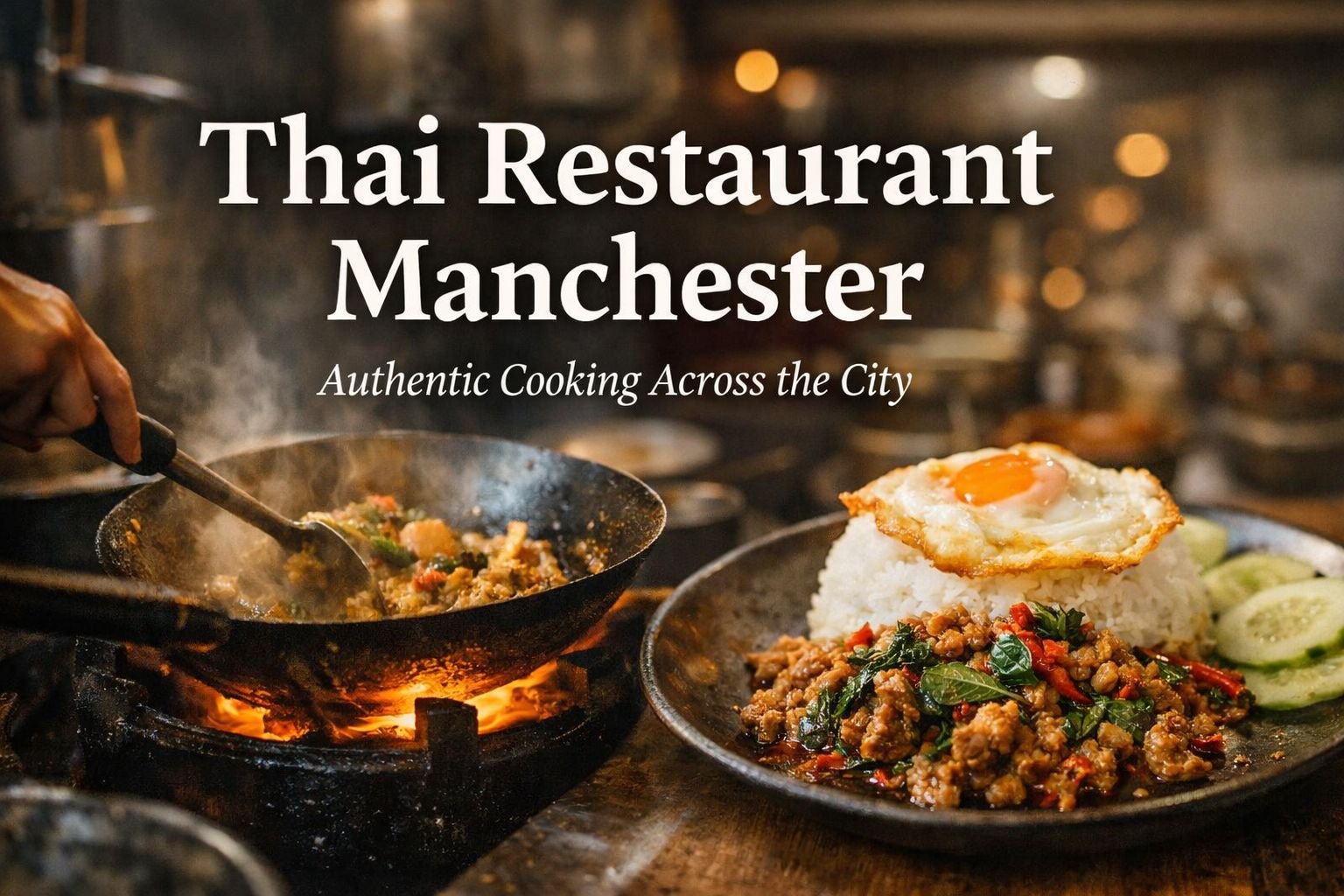
The gastronomic landscape of Greater Manchester has shifted significantly over the last decade. While the region was once defined by its Curry Mile heritage and a robust steakhouse trade, a more nuanced appetite has emerged. Central to this evolution is the enduring popularity of Thai cuisine. For the discerning diner, finding a high-quality thai restaurant manchester residents genuinely trust has become as essential to the city’s rhythm as its coffee culture or evening pub trade.
The appeal of Thai food in Manchester lies in its ability to cut through the often-grey northern weather. It is a cuisine built on vibrancy and heat, offering a sharp sensory contrast to the damp pavements of King Street or the wind tunnels of Deansgate. Yet the market has matured. Diners are no longer satisfied with generic, overly sweetened curries. Instead, there is growing demand for regional specificity, assertive spice, and the fermented depth of fish sauce that defines serious Thai cooking.
Why Thai Restaurants Matter in Manchester
The significance of the thai restaurant manchester scene extends beyond food alone. It reflects the city’s broader shift away from impersonal national chains toward independent operators with clear identities. In neighbourhoods such as the Northern Quarter and Ancoats, Thai kitchens now act as cultural anchors, delivering affordable, high-skill cooking to both the creative workforce and the evening crowd.
These restaurants bridge the gap between fast-casual street food and formal dining. Manchester residents value accessibility, and Thai cuisine delivers that without sacrificing complexity. Whether it is a quick lunchtime Pad Kra Pao or a slow-cooked Massaman curry shared among friends, a well-run thai restaurant manchester supports the city’s social fabric, where communal eating remains central to local life.
What Defines a Strong Thai Restaurant in Manchester
In a crowded market, distinction requires discipline. A high-calibre thai restaurant manchester establishes its credibility through technique, not shortcuts. Quality reveals itself in the balance of the four core flavour profiles: salty, sweet, sour, and spicy.
Ingredient choice signals expertise. The most authentic venues source holy basil rather than relying on anise-heavy substitutes. Pea aubergines, glutinous rice, and proper chillies appear consistently. Technique matters just as much. Strong kitchens build curry pastes from scratch, roasting galangal and lemongrass to release their oils before introducing coconut milk.
Service expectations also reflect local culture. Manchester diners expect relaxed, egalitarian hospitality paired with efficiency. The strongest Thai restaurants meet that balance, explaining dishes such as Som Tam clearly and confidently, without diluting heat levels or talking down to the customer.
Neighbourhoods Where Thai Food Performs Best in Manchester
The distribution of quality Thai dining tells a wider story about Manchester itself.
City Centre and Chinatown
Chinatown remains the historic core of Asian dining. Here, the thai restaurant manchester experience tends to be traditional and uncompromising. Menus often run deep, with Tom Yum soups and stir-fries that do not shy away from chilli heat, serving both city workers and long-established communities.
Northern Quarter and Ancoats
These districts host a newer generation of Thai restaurants. The focus leans toward Thai street food: Moo Ping skewers, sticky rice, grilled meats, and punchy salads. Settings are stripped-back and functional, prioritising flavour intensity and quick turnover over formal décor.
Didsbury and Chorlton
In South Manchester, Thai restaurants function as neighbourhood institutions. A suburban thai restaurant manchester relies heavily on evening trade and returning families. While the atmosphere is calmer, expectations remain high. These areas attract well-travelled diners who recognise authenticity and consistency immediately.
Best Thai Restaurants in Manchester
Manchester’s Thai dining scene is broad, but a smaller group of restaurants consistently earns repeat custom from locals and strong visibility across review platforms. The following Thai restaurants appear most frequently in independent guides and customer reviews, making them reliable reference points for anyone searching for a trusted thai restaurant manchester experience.
Tampopo (Corn Exchange & Albert Square)
Average rating: ★★★★☆ (4.3/5)
A long-established Manchester favourite with multiple city-centre locations. Tampopo is known for consistent execution, efficient service, and dishes that suit both lunchtime trade and relaxed evening dining.
Try Thai (John Dalton Street)
Average rating: ★★★★☆ (4.4/5)
Frequently recommended by experienced diners for its wok technique and balance of flavour. Try Thai has built a reputation for dependable Pad Thai and stir-fries without excessive sweetness.
Thai Kitchen No.6 (Northern Quarter)
Average rating: ★★★★½ (4.6/5)
A family-run restaurant often praised for authenticity and uncompromising spice levels. Regulars cite traditional recipes and strong seasoning as reasons for repeat visits.
Phetpailin (Chinatown)
Average rating: ★★★★☆ (4.2/5)
A quieter Chinatown option that focuses on depth of flavour rather than presentation. Known for regional Thai dishes that retain proper heat and balance.
Hong Thai (Ancoats)
Average rating: ★★★★☆ (4.4/5)
Popular with local residents and frequently recommended in community discussions. Hong Thai operates with a casual, no-nonsense approach and a menu that favours bold flavours.
Zaap Thai (Oxford Road)
Average rating: ★★★★☆ (4.1/5)
A street-food-inspired Thai restaurant popular with students and city workers. The emphasis is on speed, value, and punchy seasoning rather than formal dining.
Rating note:
Star ratings reflect aggregated public reviews across major platforms (Google, Tripadvisor, and local guides). Figures are indicative and used for comparative context, not endorsement.
Common Mistakes Diners Encounter
Despite the city’s high standards, inconsistency still appears. A middling thai restaurant manchester often falls into the trap of over-sweetening sauces in an attempt to broaden appeal. Sugar belongs in Thai cooking, but it should balance heat and acidity rather than dominate them.
Another frequent issue is menu westernisation. Overreliance on generic stir-fries strips Thai food of its herb-driven character. Diners also encounter uneven spice levels, where kitchens pre-emptively reduce heat. Authenticity depends on trust. When a menu promises spice, it should deliver it.
How Manchester Diners Choose Thai Restaurants
Manchester diners rarely follow flash marketing. In this city, reputation carries weight. A successful thai restaurant manchester builds its following through word-of-mouth and repeat custom rather than online trends.
Lunch trade prioritises speed and clarity. Evening dining shifts toward shared plates, echoing the Thai samrub style of eating. Locals pay attention to details. A properly executed Pad Thai — dry, tamarind-led, and smoky from the wok — earns loyalty faster than any interior design.
When residents search for a thai restaurant manchester they trust, the strongest indicator is rarely branding. It is aroma. The smell of jasmine rice, frying garlic, and searing chillies should reach the pavement before the menu does.
Conclusion
The appetite for Thai food in Manchester shows no sign of slowing. As local palates become more informed, expectations continue to rise. The era of the generic “oriental” menu has passed. Today, the defining thai restaurant manchester is one that respects its culinary roots while serving a city that demands honesty, consistency, and value. For operators who maintain that balance, Manchester remains one of the UK’s most receptive cities for Thai cuisine.
Manchester diners are increasingly well-travelled and food-literate. Many compare local Thai restaurants directly with meals eaten in Bangkok, Chiang Mai, or Phuket. That experience raises expectations and explains why only consistent kitchens survive long term in the city.
FAQ
Where can I find authentic Thai street food in Manchester?
Authentic Thai street food is most prominent in the Northern Quarter and Ancoats, where independent venues focus on dishes like Moo Ping (pork skewers) and Som Tam (papaya salad).
What distinguishes a traditional Thai curry from a westernised version?
A traditional Thai curry relies on fresh pastes made from galangal, lemongrass, and shrimp paste, offering a balance of salty, sour, and spicy, rather than just sweetness and thick coconut milk.
Are there good Thai restaurants in Manchester suburbs like Didsbury?
Yes, suburbs like Didsbury and Chorlton host several long-standing Thai restaurants that cater to local residents with a focus on evening dining and family-style sharing menus.
What is the most popular Thai dish in Manchester?
While Pad Thai remains a staple, Pad Kra Pao (spicy basil stir-fry) and Massaman Curry have become increasingly popular among Manchester diners seeking robust, savoury flavours.
Do Thai restaurants in Manchester cater to vegans?
Many independent Thai restaurants in Manchester offer extensive vegan options, utilizing tofu and mushroom sauces instead of fish sauce to replicate the traditional savoury profile.
Read More: Manchester Wings Restaurant: Why Locals Rate This Wing Spot Highly
