

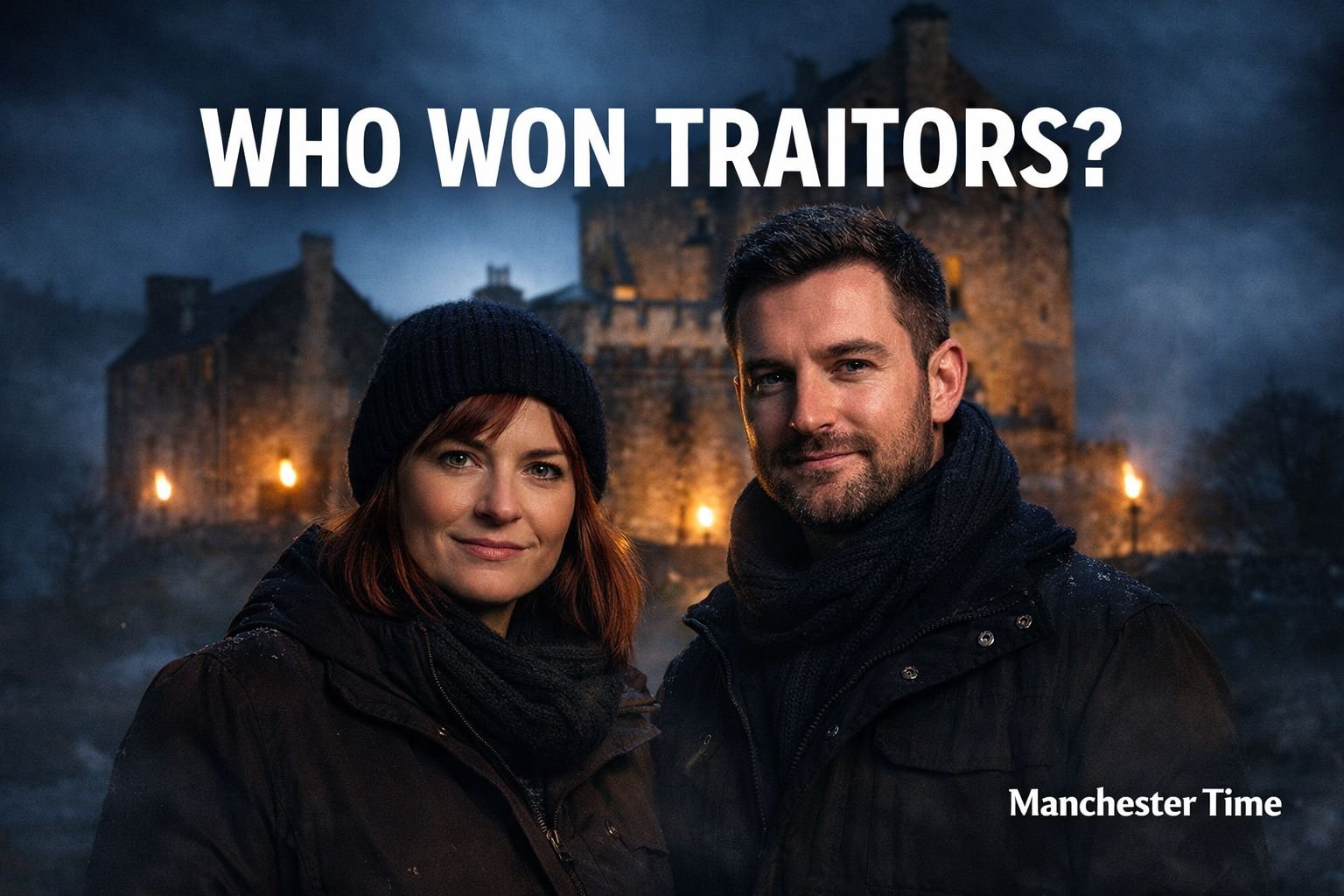
The question viewers across the UK have been asking since the final credits rolled is straightforward who won traitors?
The answer marks a historic moment for the BBC series. Rachel Duffy and Stephen Libby have won The Traitors, becoming the first pair of Traitors to triumph together in the UK version after a finale that kept millions guessing until the final vote. The duo split a prize pot of £95,750, with each taking home £47,875 following a 75-minute extended episode that held the nation in thrall.
For anyone searching who won traitors this year, the outcome represents a watershed in the show’s history. Duffy, a 42-year-old head of communications from Newry in County Down, becomes the first female Traitor to win the series. Libby, a 32-year-old cyber security consultant originally from the Isle of Lewis, joins her as part of the first Traitor partnership to share victory.
The result concludes a fourth series that has gripped viewers since its New Year’s Day launch, with the opening episode drawing 11.85 million viewers and maintaining momentum throughout January. Across the North West, from Manchester living rooms to viewing parties at venues such as Fairfield Social Club, audiences tuned in for what has become the closest thing to appointment television in the streaming age.
A finale built on loyalty among liars
Understanding who won traitors this series requires looking at the final decision that defined the game. The concluding episode turned on a single question: would Stephen Libby honour his pact with Rachel Duffy, or would he turn on his fellow Traitor when the prize money was within reach?
In the end, loyalty won out over greed, though not without cost. Stephen cast the votes that sealed the fate of his closest allies in the castle. First, PhD student Jade Scott, who had trusted him implicitly, was banished at the roundtable, leaving in tears after describing herself as “blinded by trust”. Then auditor Faraaz Noor, who had correctly identified both Traitors, was eliminated at the firepit. Finally, personal trainer Jack Butler, who had voted against Rachel throughout the finale, became the last Faithful standing before Stephen wrote his name down one final time.
“I couldn’t go back on my word to you,” Stephen told Rachel after the final vote, as host Claudia Winkleman, visibly moved, announced their victory: “Two traitors but totally faithful to each other. You did it. You absolutely did it.”
Why this result mattered
The significance of who won traitors goes beyond the prize money. The show has become a cultural phenomenon because it reflects something deeper about trust, deception, and moral compromise, ideas that resonated strongly with viewers this year.
For Duffy, the win represents a personal milestone. “It’s the best feeling in the world,” she said. “I really thought it was such a big achievement to be the first female traitor to make it to the final.” With three children at home and a mother living with dementia, she entered the castle determined to win by any means necessary.
Libby, who has since quit his cybersecurity role to explore opportunities following his television exposure, described the experience as surreal. “I’m just a small-town boy from the Isle of Lewis; things like this don’t usually happen to me,” he said, adding that the winnings would make a significant difference to his family.
Manchester and the North embrace a shared ritual
In Manchester and across the North West, The Traitors has become more than entertainment. It has turned into a shared ritual. The semi-final episode on 22 January drew 8.1 million overnight viewers, building towards what is expected to be one of the year’s biggest consolidated audiences.
But figures only tell part of the story. Pubs and social clubs organised screenings. Group chats lit up with theories. Office conversations the following morning revolved around banishments and betrayals. In a fragmented media landscape, the show created something increasingly rare: a genuinely collective viewing experience.
This regional embrace adds context to why who won traitors became such a widely searched question in the days following the finale.
Audience reaction to the winners
Reaction on social media was swift and largely positive. “What an ending on The Traitors. Rachel and Stephen were deserved winners,” wrote one viewer. Another commented: “This finale more than made up for last year’s ending. Love seeing a Traitor duo finally win.”
Even eliminated contestants offered their endorsement. Jack Butler, still processing Stephen’s betrayal, posted on Instagram: “Huge congratulations to Stephen and Rachel, the rightful winners of Traitors S4.”
Psychologists and commentators analysing the show pointed to Rachel’s timing and Stephen’s emotional restraint as decisive. Their partnership demonstrated that successful deception requires strategy, emotional intelligence, and the nerve to make brutal decisions when it matters.
What viewers took from the ending
For those asking who won traitors, the answer arrived decisively. But the manner of victory sparked as much discussion as the result itself. The finale showed that manipulation, when combined with loyalty and discipline, can outweigh sentiment in the game’s final moments.
As series four closes, the format’s reputation feels enhanced rather than diminished. Rachel Duffy and Stephen Libby have secured their place in the show’s history, and in the wider cultural conversation.
The turret door has closed. The winners have been crowned. And while who won traitors is now settled, the bigger question for viewers is already forming: who will dare to play it better next time?
Read More: Harry Styles Tour 2026: Wembley Anticipation Builds as UK Fans Prepare for Ticket Rush