


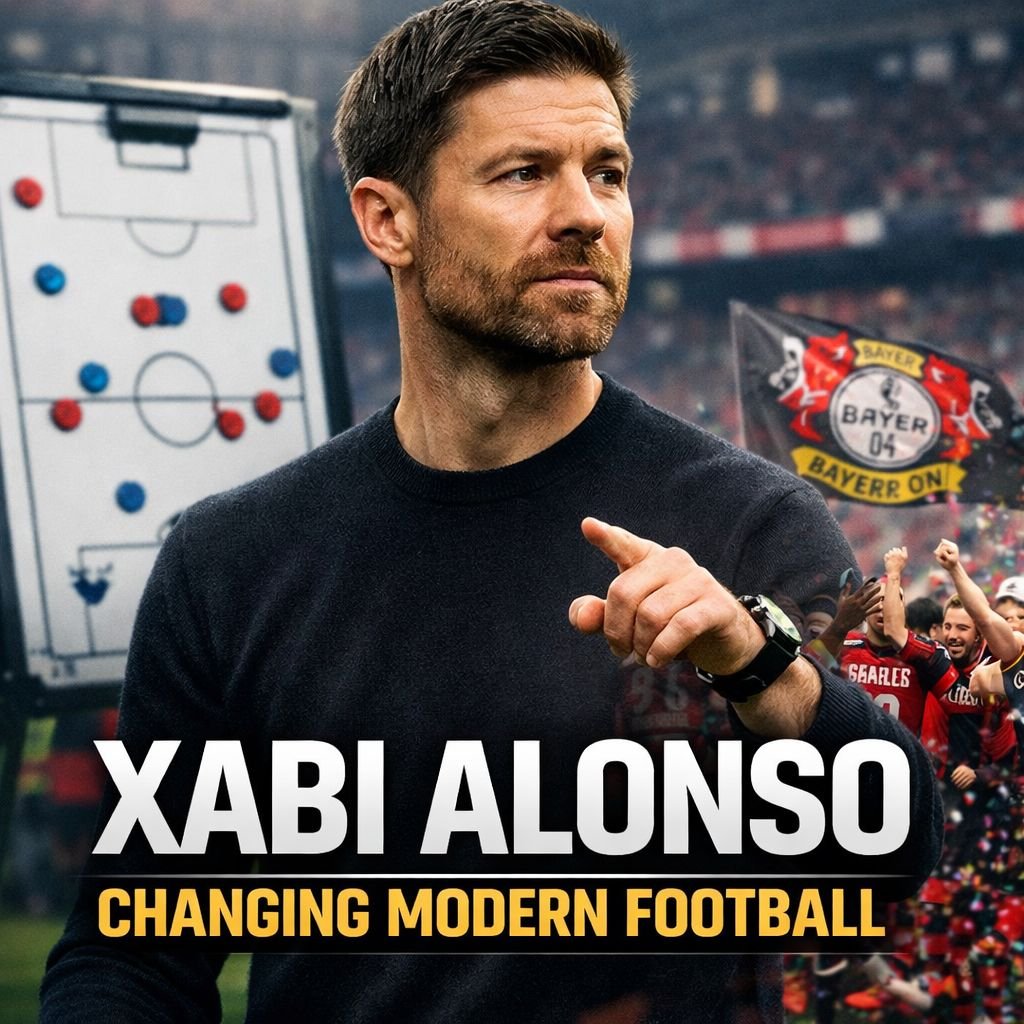
In an era dominated by animated touchlines and reactive decision making, Xabi Alonso has built success through restraint and precision. His rise from former elite midfielder to one of Europe’s most respected young coaches has not been driven by hype, but by methodical progress and unmistakable clarity of ideas.
What separates him from many contemporaries is his ability to translate intelligence into structure. His teams show consistent patterns in possession, disciplined organisation without the ball, and a collective understanding of space that reflects a deep reading of the modern game. Rather than chasing tactical fashions, he refines fundamentals control, balance, and timing into a framework that delivers sustainable results.
That combination of calm authority and tactical depth has positioned him as a reference point for how modern football management can succeed without excess.
Playing Intelligence as a Coaching Foundation
Alonso’s playing career shaped the coach he would become. Emerging from Real Sociedad before excelling at Liverpool, Real Madrid, and Bayern Munich, he operated at the centre of some of Europe’s most sophisticated midfields. Exposure to contrasting philosophies under José Mourinho, Carlo Ancelotti, and Pep Guardiola gave him a rare, holistic understanding of how systems function under pressure.
As a player, anticipation defined his game. He read danger early, controlled tempo, and prioritised positioning over physicality. Those traits now underpin his coaching identity. His teams rarely look rushed or reactive; instead, they manage moments, dictate rhythm, and minimise chaos through collective awareness.
Tactical Identity Without Rigidity
At the core of Alonso’s management lies structure paired with freedom. His preferred setups often resemble a back three that morphs fluidly in possession, creating overloads across the pitch without sacrificing defensive stability. Formations, however, remain secondary to function.
Wing-backs provide width at speed, midfielders rotate intelligently to support build-up, and attacking players occupy half-spaces with clear spacing rules. Every movement serves a purpose within the wider system. Players understand not only where to be, but why their positioning affects teammates around them.
This clarity allows individuals to make autonomous decisions, reducing dependency on constant instruction and increasing collective efficiency.
Adaptability as a Competitive Weapon
Unlike ideologues wedded to a single approach, Alonso adapts to context. His early managerial work prioritised transitional football, maximising efficiency against stronger opponents. As squad quality and confidence grew, his teams evolved into possession-dominant units capable of controlling games through circulation and positional rotations.
Out of possession, pressing triggers remain coordinated rather than frantic. Pressure begins with the forwards, while midfielders block passing lanes using cover shadows. Upon losing the ball, immediate counter pressing from nearby players delays opposition transitions, allowing the defensive structure to reset.
This ability to combine sustained possession with direct transitional threat makes his sides difficult to prepare for and even harder to disrupt.
Results That Validate the Method
The 2023–24 season offered the clearest evidence of Alonso’s effectiveness. His side secured an unbeaten domestic double, rewriting Bundesliga history while demonstrating remarkable mental resilience. Comeback victories against high-level opposition highlighted not just tactical organisation, but conditioning and belief ingrained through training.
Training sessions under his guidance prioritise repetition and relevance. Small-sided exercises replicate match scenarios, while positional drills reinforce spacing and decision-making. The result is a squad that executes plans instinctively rather than mechanically.
Why Elite Clubs Value Xabi Alonso
Modern football increasingly rewards stability over spectacle. Alonso offers boards and sporting directors a profile built on reliability, communication, and long term development. He manages personalities quietly, explains ideas clearly, and builds trust through consistency rather than charisma.
His leadership style reflects situational awareness. He knows when to demand intensity, when to protect players, and when to maintain standards without confrontation. That emotional intelligence, combined with tactical competence, allows squads to progress without fracturing under pressure.
Just as importantly, players improve within his system. Decision making sharpens, positional awareness deepens, and confidence grows from understanding rather than improvisation.
Present Reality and the Road Ahead
Having established a clear identity and delivered historic success, Alonso now faces the challenge of sustaining excellence at the highest level. His reputation continues to grow not because of speculation, but because his teams perform with consistency and purpose.
Wherever his path leads, his trajectory suggests longevity. By avoiding extremes tactical or emotional he has positioned himself as a coach capable of adapting across leagues, cultures, and competitive demands. That adaptability may ultimately define his long-term success.
A Blueprint for Modern Football Management
Football’s future belongs to managers who combine intelligence with restraint. Xabi Alonso embodies that balance. His achievements reflect a philosophy rooted in clarity, adaptability, and collective understanding rather than short term impulse.
As the modern game continues to evolve, his approach feels less like a passing trend and more like a sustainable blueprint. In redefining how authority, tactics, and leadership intersect, he is not merely following football’s direction he is helping shape it.
Read More: Why Darren Fletcher Name Keeps Surfacing as Manchester United Seek Stability
FAQs
What is Xabi Alonso’s coaching philosophy?
His philosophy centres on positional discipline, adaptability, and collective decision-making. He prioritises control with purpose rather than possession for its own sake.
Why is Xabi Alonso considered a modern manager?
He combines tactical flexibility, emotional intelligence, and data informed preparation, aligning closely with how elite football clubs now operate and evaluate success.
What formations does Xabi Alonso prefer?
He often uses flexible back three systems that shift fluidly in possession, though his focus remains on function and spacing rather than fixed formations.
How does Xabi Alonso differ from other young managers?
Unlike many emerging coaches, he avoids rigid ideology. His teams adapt to squad strengths and match context, making his approach more sustainable long term.
Is Xabi Alonso known for attacking or defensive football?
His teams balance both. They control games through structure and ball circulation while remaining effective in transition and defensive organisation.
Why do elite clubs value Xabi Alonso so highly?
Clubs value his ability to deliver results without volatility, develop players systematically, and maintain tactical clarity under pressure.
Read More: Tochi Chukwuani Joins Rangers in Key January Move as Midfield Plans Take Shape
